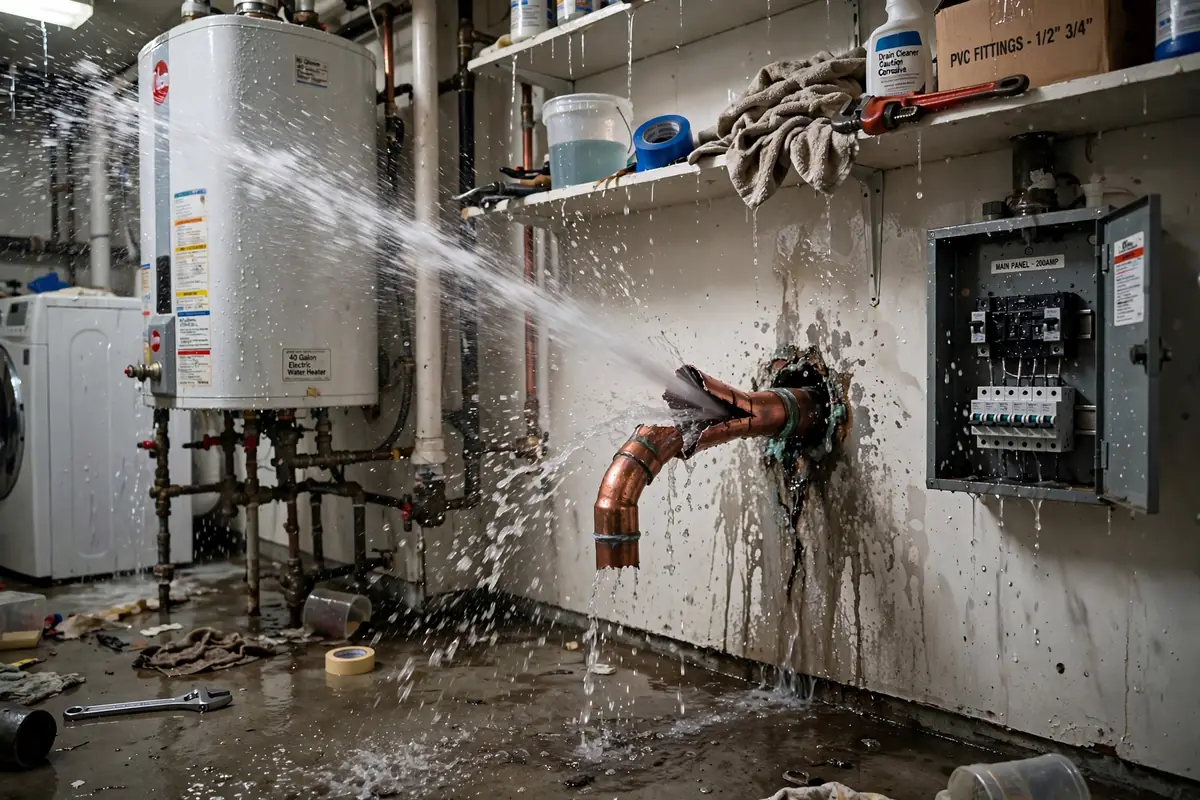
Professional emergency burst pipe repair for Carson and South Bay homes.
When a pipe bursts in Carson, water can spread through walls, floors, and cabinets in minutes. Call (123) 456-7890 right away and shut off the main shutoff valve if you can do so safely. Carson Pipe Pros answers around the clock across Carson and the South Bay, isolates the break, and starts the repair on the same visit whenever conditions allow it to be done safely.
It usually starts with a sound: water running where no fixture is on, a hiss behind a wall, or dripping from a ceiling that was dry an hour ago. Then the stain spreads, paint bubbles, and a copper pipe or supply line that held for years has finally split. In Carson homes, that moment often comes in an older galvanized steel line, a worn solder joint, or a fitting stressed by years of hard water and steady pressure.
Do not wait to see if it slows down. A burst line under full household pressure moves a surprising amount of water, and every minute adds damage to drywall, flooring, and the framing behind them. Homes near Dominguez Park, along Avalon Boulevard, and in the older tracts near Carson High School share the same mix of aging pipe materials, so a small split can quickly become a whole room problem if the water keeps flowing.
Bursts choose inconvenient hours because pressure is highest when the house is quiet and no one is using water. Late at night or during a workday trip away, a failed washing machine supply line, a split behind the refrigerator, or a broken line in the garage can run unchecked far longer than a leak that starts while someone is cooking nearby. That is why knowing the shutoff location before anything fails matters so much in a real emergency. Walk the property on a calm day, find the main valve and the water heater shutoff, and make sure every adult in the home knows both locations and can turn them without tools or struggle.
Find the main shutoff valve first. On many Carson houses it sits near the front hose bib, by the water meter at the curb, or on the wall where the main line enters the home. Turn it clockwise until the flow stops. If the break is tied to one fixture, the angle stop under that sink or behind that toilet may stop the water faster while the rest of the house stays live.
Once the water is off, open a low faucet to drain what remains in the lines and relieve pressure. Move rugs, boxes, and electronics out of the wet area, and keep clear of any ceiling that is sagging or bowing. If water has reached outlets, lights, or the electrical panel, stay out of that area and say so when you call (123) 456-7890, so the visit can be planned with that hazard in mind from the start.
While you wait, a few practical steps protect the home without adding risk. Place buckets under active drips that fall from a ceiling, use towels to keep water from spreading under doors into dry rooms, and lift furniture legs onto blocks where water has pooled. Photograph the wet areas and the broken pipe area once the flow stops, since clear records help any later restoration planning. Keep children and pets out of the wet zone, especially where drywall has fallen or flooring has turned slick, and resist opening walls yourself, since a pressurized line, wiring, and sharp pipe edges can all hide behind the same panel.
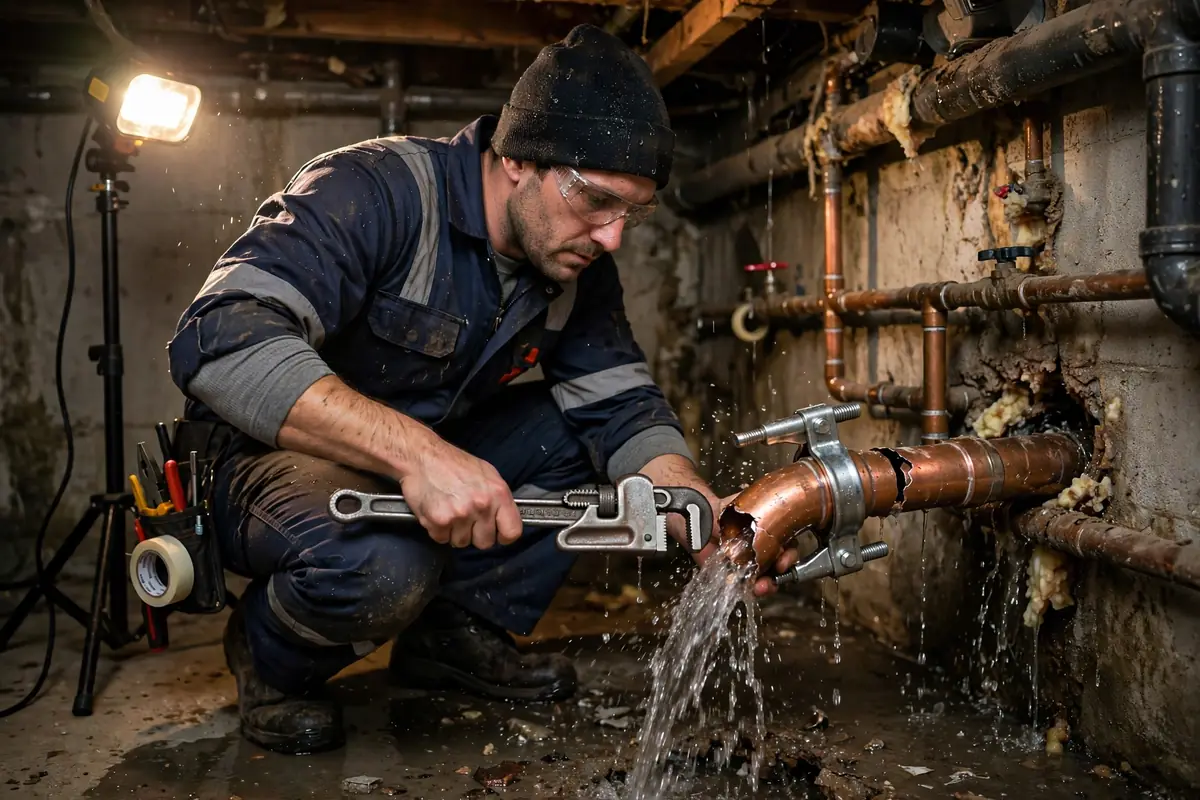
The technician starts by confirming the shutoff is holding, then traces the wet path back to the break. A moisture meter shows how far water has traveled inside the wall, and opening the smallest practical section of drywall exposes the failed copper pipe, PEX run, or fitting. The damaged section comes out, not just the visible split, because pipe around a burst is often thinned or stressed as well.
The replacement section is joined with a proper solder joint on copper or a correct compression fitting where that method fits the line and access. An isolation valve may be added so a future problem in that branch can be shut down on its own. Before any wall is closed, the line is brought back up to pressure slowly and every new joint is watched under full load, because a repair that only looks dry at low pressure has not been tested at all.
The visit does not end at the new joint. The technician walks the nearby system, checking the closest angle stop valves, the water pressure regulator reading at a hose bib, and any other section of the same run that the opening exposed. A burst is information about the line that produced it, and exposed pipe that shows heavy corrosion or thinning gets named plainly in the findings rather than covered back up without comment. You hear what failed, what was replaced, what the pressure test showed, and what deserves watching, so the emergency ends with a clear picture of the system rather than only a repaired ceiling.
How fast can a burst pipe be fixed? Once the water is shut off and the break is exposed, many straightforward repairs are completed during the same visit. Cutting out a failed section of copper pipe or PEX, fitting the replacement, and pressure testing the joints is focused work when access is clear and the surrounding pipe is still sound enough to join to.
Access is the biggest variable. A burst under an open ceiling or inside a garage wall goes faster than a break buried behind tile, inside a slab, or above a finished ceiling with no access panel. If the line that burst is galvanized steel that is corroded along its whole length, the honest repair may involve replacing a longer run rather than patching one split and leaving the next failure a short time away.
Water cleanup runs alongside the repair timeline, not after it. Even when the pipe itself is fixed promptly, walls and floors that took on water need drying attention right away. When you call (123) 456-7890, describe where the water is showing and whether the main shutoff is already closed. That detail helps the technician arrive with the right fittings, pipe materials, and drying contacts ready.
What causes a pipe to burst in a house? Age and corrosion lead the list in the South Bay. Galvanized steel narrows and weakens from the inside over decades, copper develops pinholes where hard water and chemistry wear the wall thin, and old solder joints fatigue. A water pressure regulator that has failed can also push household pressure far above what supply lines and appliance hoses were meant to hold, stressing every joint at once.
Sudden pressure spikes matter too. When a valve slams shut or a regulator sticks, the shock wave that travels through the line can split a weak section that had been holding quietly. Tree roots do not burst indoor lines, but shifting soil and settling around older Carson lots can strain rigid pipe, especially where a line passes through the foundation or under a driveway.
Prevention follows the causes. Keep an eye on household water pressure, replace supply lines to sinks, toilets, and laundry machines before they look tired, and treat a single pinhole leak as information about the whole run, not just that one spot. If one section of an aging line has worn through, nearby sections of the same material and age deserve a close look during the same visit.
Warning signs often arrive before the burst itself. A faint hammering sound when faucets close points to pressure shock moving through the lines. Rust colored water, a drop in pressure at one fixture, or a small damp patch that returns after drying each suggest a line weakening in a specific place. Acting on those signs with an inspection and a pressure check can move a repair from the emergency column to a planned visit, on a dry afternoon, with the right parts on the truck and no water spreading through the house while decisions are made under pressure.
Straight answers before you call.
Describe what your pipes are doing and we will point you to the right next step.
Call (123) 456-7890Many exposed breaks are repaired the same visit once the water is off and the section is accessible. Buried or corroded lines take longer, and your technician will explain the timeline before work begins.
Shut off the main water valve first, open a low faucet to drain the lines, and keep clear of wet electrical areas. A lasting repair means cutting out the damaged section and joining new pipe properly, so call (123) 456-7890 for that part.
It is commonly near the front hose bib, by the street meter, or where the main line enters the house. Turning it clockwise stops water to the whole home.
If water has reached outlets, fixtures, or the panel, avoid that area and mention it when you call. Safety around wet electrical systems comes before any plumbing repair.
Not always, but a burst in an aging galvanized or copper run is a reason to inspect the rest of that line. The same age and water conditions affect nearby sections too.
Hidden leaks found with acoustic and thermal equipment, no guesswork.
Water extraction, drying, and cleanup after a pipe failure.
Camera inspection and repair for cracked, root filled, and collapsed sewer lines.
Snaking and hydro jetting for drains that keep slowing down or backing up.
Call now and describe what is happening. We will take it from there.
Call (123) 456-7890