
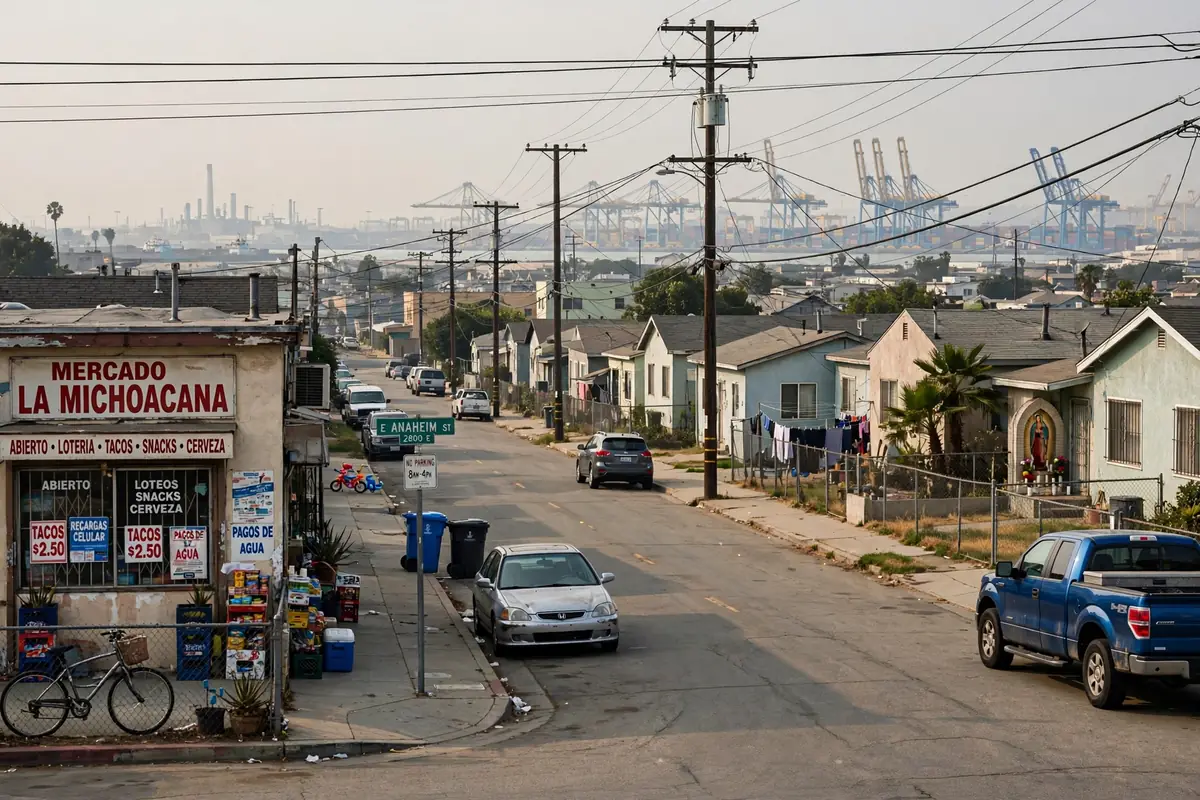
A Port Community Built Around the Harbor
Wilmington grew up with the Port of Los Angeles at its feet, and that working waterfront identity still defines the community: longshoremen, refinery workers, truckers, and families whose lives follow the rhythms of the harbor. The residential streets sit close to industry, with refineries along the harbor edge and freight corridors never far away.
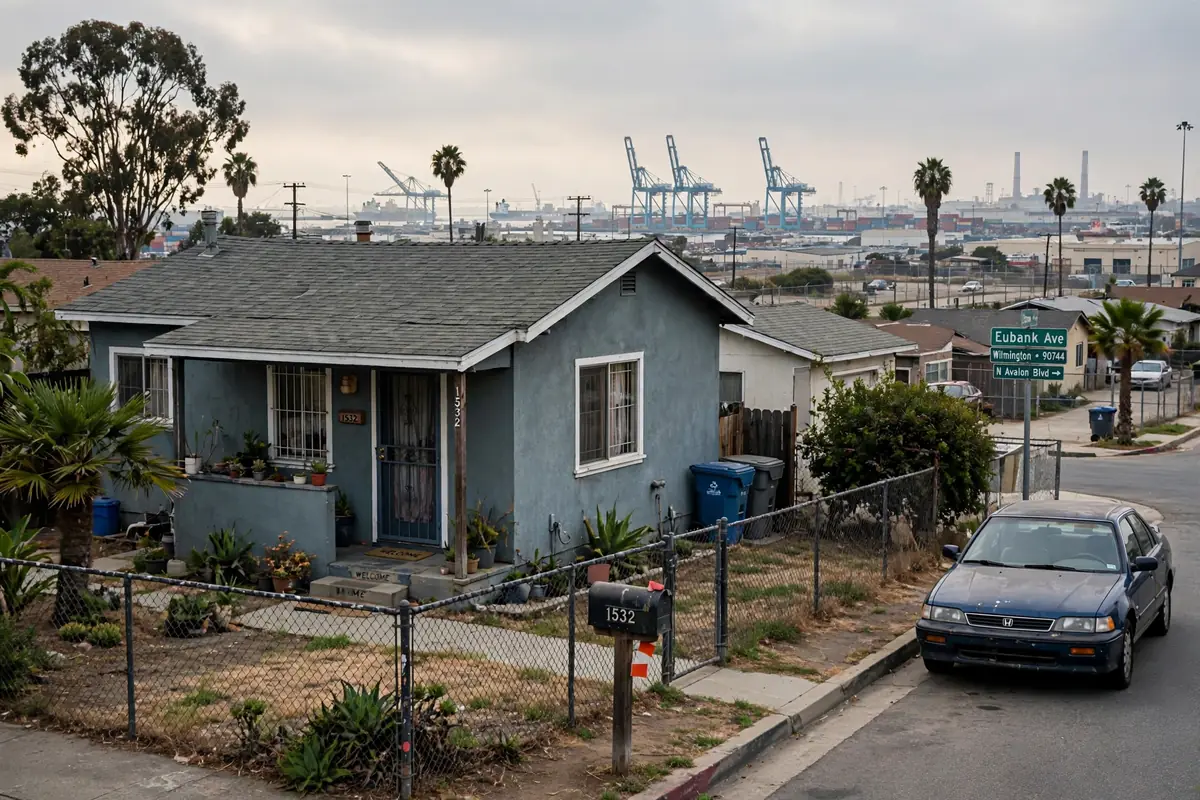
That setting is hard on houses. The housing stock leans older, much of it built for port and refinery workers in the early and middle decades of the 1900s, and the same marine environment that rusts port equipment works on home plumbing year after year. Wilmington pipes live a tougher life than pipes a few miles inland.
We keep that reality at the center of every Wilmington call. A fitting that would last decades in a dry inland garage may have half that life here, and inspections that skip the exterior lines miss the very places this community plumbing fails first.
Marine Air and Industrial Water: Wilmington Corrosion Up Close
Salt laden air settles on every exposed surface in Wilmington, and plumbing hardware is no exception. Hose bibs green with corrosion, gate valves frozen in place, galvanized fittings rusting at the threads: we see the pattern on block after block. The corrosion is not cosmetic. It eats pipe walls from the outside while water works from the inside.
Industrial surroundings add their own pressures. Wilmington water and soil conditions near the harbor are unkind to buried metal lines, and older service lines from the street can corrode along their length underground, leaking invisibly until the bill or a soggy yard gives them away. Main shutoff valves, often original, are a frequent failure point when corroded homes finally need their water stopped.
The practical response is attention to the exterior system during every visit: the meter connection, the main valve, the water heater fittings, and any exposed runs. Catching exterior corrosion early in Wilmington is the difference between replacing a valve on a Tuesday and flooding a kitchen on a Sunday night.
Older Wilmington Homes and the Pipe They Still Carry
Wilmington homes from the early 1900s through the postwar years carry the full museum of residential pipe: galvanized steel supply lines, copper added in later remodels, cast iron drains, and clay sewer laterals. Many houses have all four on the same property, each aging on its own schedule and failing in its own way.
Galvanized lines here show both internal rust and external corrosion, a double attack that inland homes mostly escape. Cast iron drains scale and thin, and their hub joints weep as the original packing materials dry out. It is common in Wilmington to find a home whose pipes are original in the walls but patched in a dozen places below the floor.
Ruptures and Leaks That Follow Wilmington Corrosion
Wilmington burst pipe calls often start outside the living space: a service line letting go in the yard, a corroded fitting behind the water heater spraying the garage, or a hose bib body splitting and running water down the side of the house for hours before anyone notices. Exterior failures waste enormous amounts of water because they can run unseen.
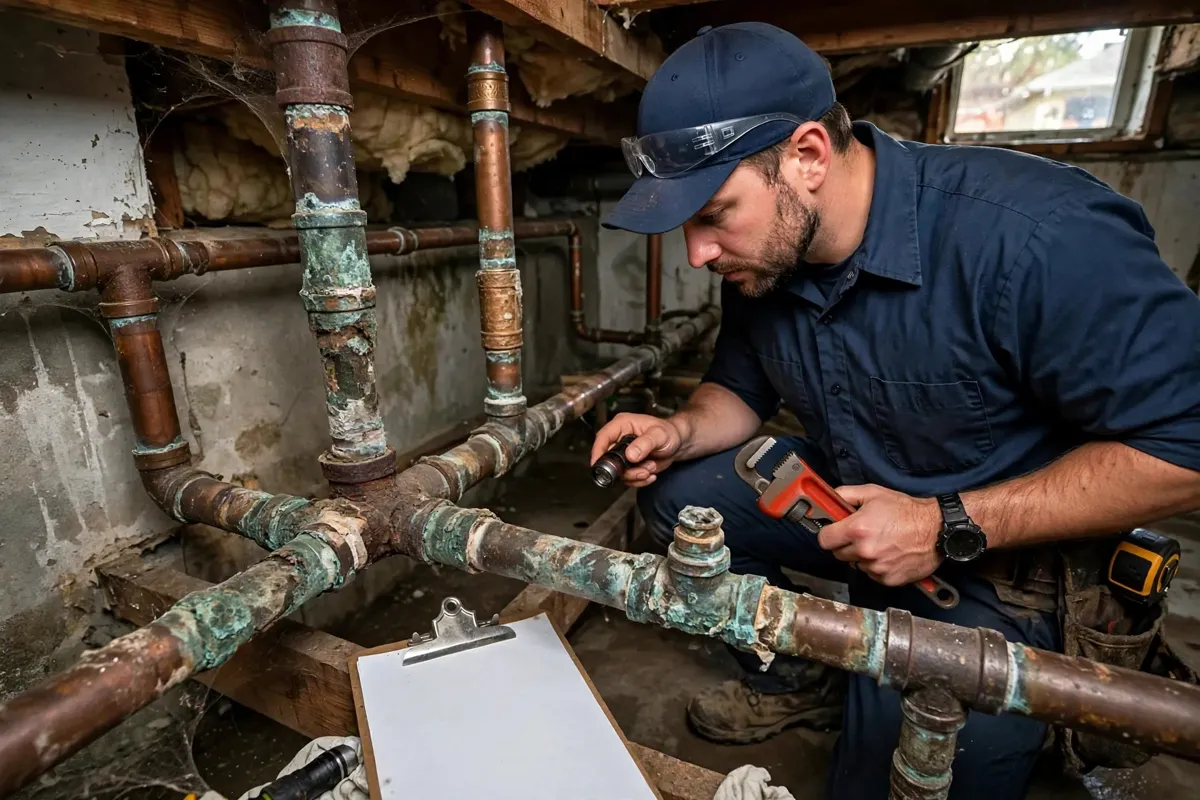
Interior bursts follow the usual galvanized script, with one local twist: the main shutoff valve itself may be too corroded to close. If your Wilmington valve will not turn or leaks when you try it, do not force it. Call (123) 456-7890, and we will shut the water down at the meter and replace the valve as the first step of the repair.
Sewer failures round out the Wilmington pattern. Root filled clay laterals and scaled cast iron drains back up into tubs and floor drains, and because many homes sit low near the harbor, those backups deserve fast attention. Camera inspection separates a cleaning job from a pipe replacement honestly.
Drum Barracks to Banning High School: Wilmington Landmarks
Wilmington holds more history than its industrial image suggests. The Drum Barracks Civil War Museum preserves the last remaining building of a Union Army camp, a genuine piece of 1860s California tucked into a residential neighborhood. Phineas Banning, the founder of Wilmington and father of the Los Angeles harbor, left his mark across the community that bears his energy.
Banning High School serves as the community anchor school, and the neighborhoods around it, along Avalon Boulevard and Anaheim Street, hold the classic Wilmington mix: older homes, small apartment buildings, churches, and family businesses that have served the port community for generations.
Plumbing in a community like this is generational work. The house we repipe this year may sit beside the house where we replaced a water heater line five years ago. Wilmington rewards plumbers who remember its streets, and we build our routes here with that long view in mind.
How Wilmington Calls Move From Shutoff to Restoration
Wilmington calls begin with shutoff, and here that step gets extra respect. We test the main valve rather than assume it, fall back to the meter when the valve is corroded, and only then open the system. Diagnosis follows: the failed section, the material, and the condition of connected runs inside and outside the home.
We show you the evidence as we go, including the corroded pieces we remove. Wilmington homeowners who work in the trades, and there are many here, appreciate direct talk: what failed, why it failed in this environment, and which replacement materials will stand up to harbor conditions better than what came out.
Sewer Lines and Slab Work in Wilmington Soil
Wilmington soil near the harbor stays damp, and clay sewer laterals sitting in damp ground for eighty years face constant root pressure at their joints. The result is the familiar backup cycle: roots grow in, drains slow, a clearing buys a season, and the cycle repeats until the lateral is jetted, repaired, or replaced based on what a camera shows.
Slab leaks appear in Wilmington postwar homes as they do across the South Bay, with warm floors and climbing water bills as the early signs. We locate them acoustically and favor rerouting lines through the attic or walls when the under slab system is broadly corroded, which in this environment it often is.
Refinery Rows to Residential Blocks: Where We Serve in Wilmington
We cover all of Wilmington in ZIP code 90744, from the residential blocks near Banning High School and Drum Barracks to the homes along Avalon Boulevard, Anaheim Street, and Pacific Coast Highway, and the neighborhoods edging the refinery corridor and the harbor itself.
Wilmington is close to our Carson base, and its flat street grid makes for quick routing in most traffic conditions. When you call (123) 456-7890, mention your cross streets and whether the problem is inside, outside, or at the water heater, and we will arrive with the fittings and valves that Wilmington corrosion usually demands.
We also serve the small apartment buildings and duplexes spread through Wilmington, where a single corroded riser can affect several units. Coordinating shutoffs with managers and tenants is part of the job, and we document the failed sections clearly for owners who are not on site.
Retiring Corroded Lines With a Full Wilmington Repipe
A repipe in Wilmington solves two problems at once: the internal rust choking your galvanized lines and the mixed, patched network that decades of small repairs created. New PEX supply lines with modern fittings resist both the water inside them and, when routed through the home interior, the marine air that attacks exposed metal.
Exterior and garage runs get special attention in a Wilmington repipe plan. Lines that must stay exposed are routed and protected with the harbor environment in mind, valves are renewed so shutoffs actually work, and the water heater connections are rebuilt as part of the same project rather than left as the oldest link.
Catching Wilmington Pipe Trouble Before It Spreads
Wilmington homeowners can buy themselves time with a short exterior routine. Twice a year, walk the outside of the home: look at the main valve, hose bibs, and any exposed pipe for fresh rust, green corrosion, or damp soil below them. Check the water heater connections and the ground around the meter for unexplained wetness.
Inside, the early warnings are the same as anywhere: pressure changes, rusty water, drains slowing together. In Wilmington the exterior signs simply arrive sooner, and catching them early keeps a corroded fitting from becoming a flooded room. When you spot something, call (123) 456-7890 and describe it. Small exterior repairs are among the fastest visits we make.
A Night Leak Near the Harbor: Wilmington Emergency Steps
Wilmington homes add one wrinkle to the standard burst pipe routine: the main shutoff valve itself may be corroded by harbor air and unwilling to turn. Start there anyway, with steady pressure and no tools forced on the handle. If the valve resists, weeps, or spins without closing, stop and plan on the meter shutoff instead, and tell us exactly that when you call.
While help is coming, drain the lines from a low faucet, and pay attention to the garage and exterior walls, where Wilmington failures so often hide. A garden hose bib or a water heater line can run for hours against an outside wall unnoticed at night. Walk the perimeter with a flashlight, listen for running water at the meter, and move stored items off any wet concrete.
Call (123) 456-7890 with your cross streets off Avalon Boulevard or Anaheim Street and the status of your shutoff valve. Wilmington is a short run from our Carson base, and arriving to a home whose water is already controlled, or knowing we must start at the meter, saves the minutes that matter most in a harbor side house full of corroding pipe.
Wilmington Bungalow Courts and Duplexes: Shared Lines, Shared Problems
Scattered through the older neighborhoods of Wilmington are bungalow courts and duplexes from the early decades of the port, built for harbor workers and still housing families today. These small multi unit properties share plumbing in ways single homes do not: one sewer lateral serving several units, water lines branching from a single main, and shutoffs that control more than one household.
Shared systems need shared planning. A corroded main in a bungalow court affects every tenant at once, so repairs there are scheduled and communicated differently: shutoff windows announced, work sequenced to restore water unit by unit, and findings documented for owners who may manage the property from elsewhere in the city or beyond it.
The materials are the familiar Wilmington set, galvanized and cast iron with clay laterals, all seasoned by marine air. Courts that renew their mains and laterals on a plan keep tenants for years; courts that patch forever live with recurring backups and bursts. We help owners build the planned version, starting with a camera survey and an honest map of what the property actually holds.