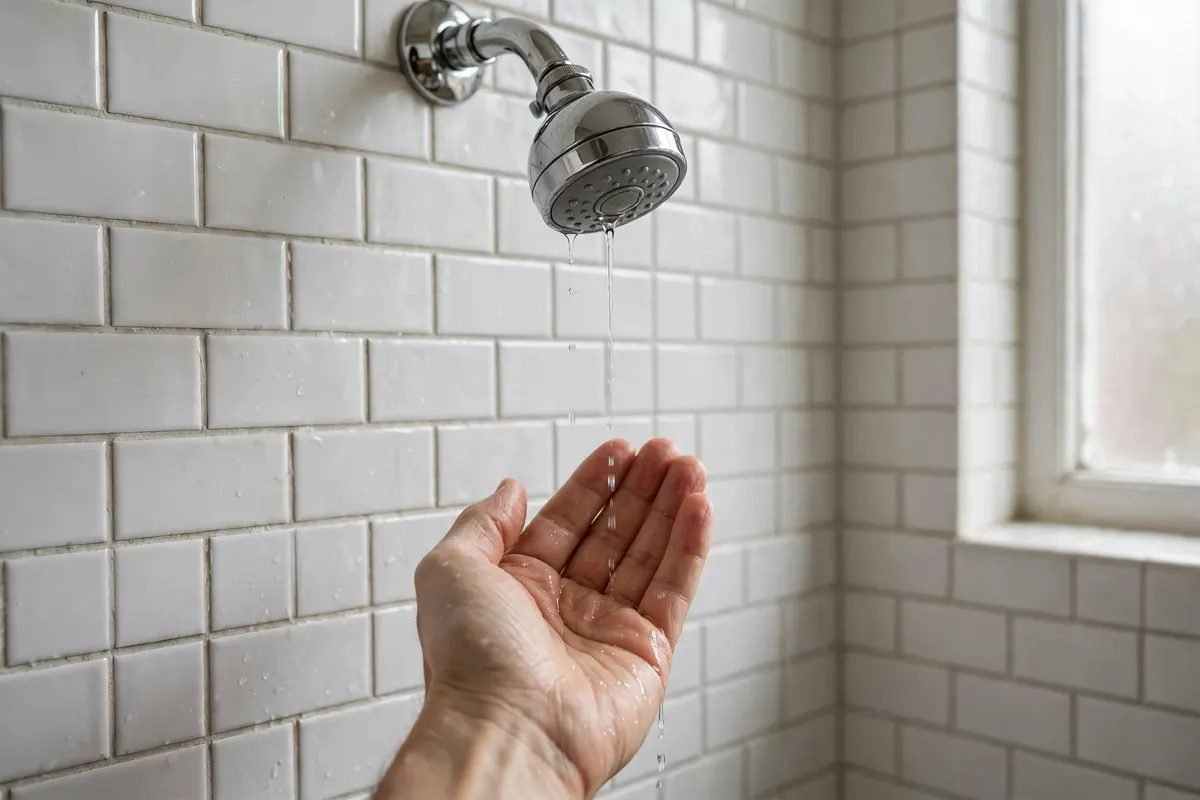
Pressure that fades slowly or falls off a cliff is your plumbing describing its own condition. This guide walks through what steals pressure in South Bay homes, the checks that separate a small fix from a big one, and when weak flow means a pipe has already failed.
Low water pressure across a whole Carson home usually comes from one of four places: galvanized pipes corroding shut from the inside, a pressure regulator failing at the main, a valve that is not fully open, or water leaking out of the system before it reaches your taps. Pressure lost at one fixture only is almost always local, like a clogged aerator or showerhead. A gauge reading at a hose bib plus a meter check separates the causes quickly. Call (123) 456-7890 to have yours measured.
Homeowners often describe low pressure as one problem, but plumbers hear two different complaints inside it. Some homes have low pressure, meaning the push behind the water is weak everywhere, all the time. Others have low volume: the push is fine at a single tap, but open a second fixture and everything starves. The first points at the regulator, the main line, or the city feed. The second points at pipes that have narrowed inside, which is the signature disease of the galvanized lines still serving many Carson, Gardena, and Harbor City homes.
Timing narrows it further. Pressure that faded over years is corrosion doing slow work. Pressure that dropped this week is an event: a failing regulator, a valve bumped during other work, a main line starting to leak, or debris knocked loose into the lines. Naming which pattern you have is most of the diagnosis, and it decides whether you are looking at an adjustment, a part, a repair, or a repipe conversation.
Galvanized steel pipe does not usually burst without warning. It strangles first. The zinc coating that once protected the steel gives up over decades, rust builds inward from the walls, and a pipe that started with a clear half inch channel can end up passing water through a rough, rust lined hole the width of a pencil. The shower weakens, the washing machine fills slowly, the upstairs bathroom loses every contest with the downstairs hose. By the time flow bothers you daily, the narrowing is advanced.
The pressure regulator is the other quiet thief. This bell shaped valve on the main line, usually near the front hose bib or in the garage, holds house pressure steady against street pressure. When its diaphragm and spring wear out, it can fail in either direction: creeping pressure that bangs pipes and wears out appliance valves, or choked pressure that starves the whole house. Regulators in South Bay homes often serve fifteen years or more without a glance, well past their reliable life.
Finally, pressure leaves through holes. A main line leaking between the meter and the house, a slab leak under the floor, or a toilet fill valve that never fully closes all bleed pressure and volume around the clock. Those losses announce themselves on the meter and the bill as much as at the tap, which is why a pressure complaint and a climbing water bill so often arrive together.
Start at the smallest scale. Unscrew the aerator from a weak faucet and look for grit, rust flakes, and mineral chunks. Scale and debris collect there first, and a clogged aerator fakes a house wide problem at a single tap. Do the same with a showerhead: soak it in vinegar overnight if the spray pattern is ragged. If one fixture is weak and its aerator is clean while its neighbor runs strong, the problem lives in that branch or fixture, not the system.
Then walk the valves. Find the main shutoff where the line enters the house and confirm it is fully open, and check the valve at the meter as well if it was touched recently. Valves left a quarter turn short after unrelated work are a surprisingly common cause of sudden weak flow. If your home has a pressure regulator, note any banging, whistling, or pressure that feels strong at first and then fades at an open tap, which is a regulator struggling to hold its setting.
Finish with the meter. With every fixture off, a moving leak indicator means water is leaving the system somewhere, and your pressure loss is a leak until proven otherwise. A still meter with weak flow points back at narrowing pipes or the regulator. Either result is worth writing down before you call (123) 456-7890, because it tells the plumber which test to run first.
Gradual pressure loss is a maintenance story. Sudden pressure loss can be an emergency wearing a disguise. If your pressure fell sharply in a day, if the meter spins with everything off, or if weak flow arrives with new wet spots, warm floor patches, or the sound of running water in a wall, treat it as a line that has already failed and is emptying into your slab, wall, or yard.
The mirror image deserves the same respect. Pressure that surges, bangs pipes when valves close, or keeps climbing at night usually means the regulator has failed open and street pressure is hitting your home undiluted. That stress shortens the life of every valve, hose, and appliance in the house and turns the next weak joint into a burst. Both directions of regulator failure earn a prompt call, not a wait and see.
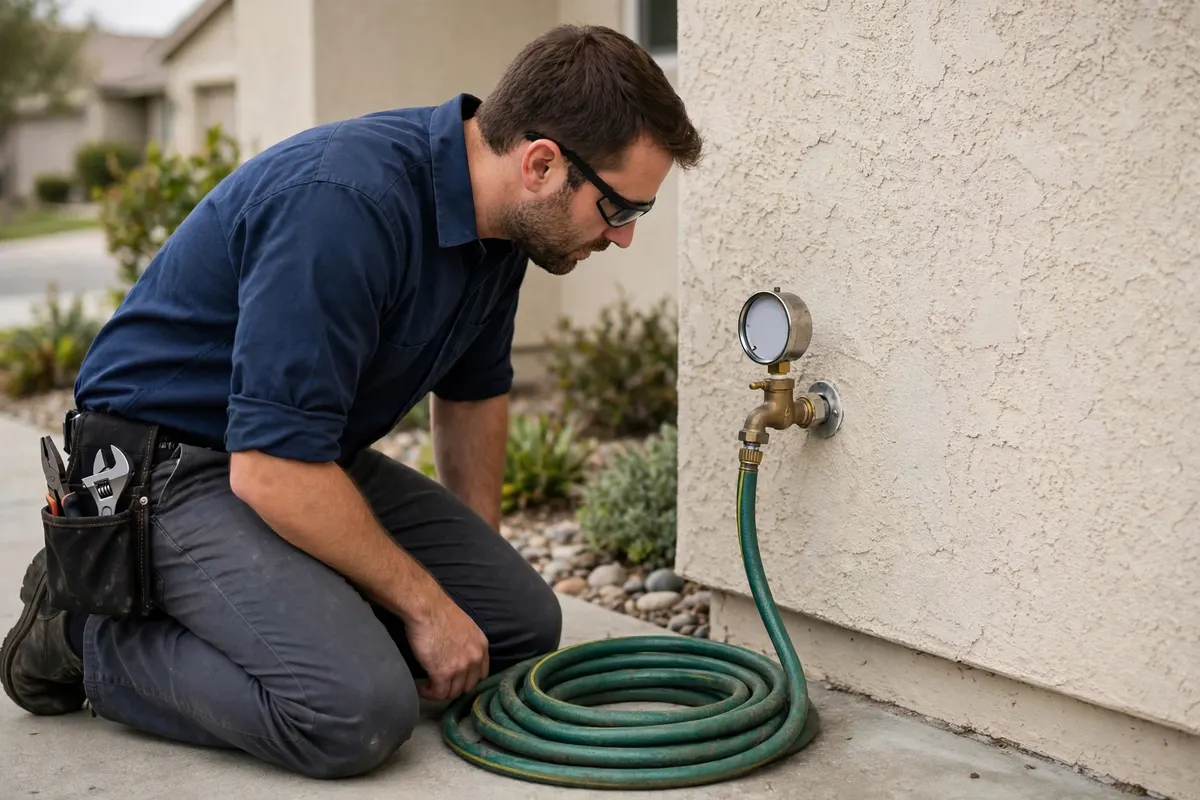
Guessing at pressure is how homeowners end up buying parts they never needed. We start with a gauge on a hose bib: a static reading with nothing running, then a working reading while fixtures open, which separates low push from low volume in one visit. We test the regulator directly, check the meter for silent losses, and isolate branches of the house one at a time to find which runs have narrowed or are leaking.
The fix follows the finding. A failed regulator gets replaced and set. A half closed or corroded valve gets corrected. A leaking main or slab line gets located and repaired. And when the tests show galvanized runs narrowed throughout the house, we will lay out what a full plumbing inspection found and what repiping would actually involve, so you can weigh one repair against ending the pattern. Either way, you finish the visit with real numbers for your home instead of guesses.
Straight answers before you call.
Describe what your pipes are doing and we will point you to the right next step.
Call (123) 456-7890A single weak bathroom almost always has a local cause: a showerhead or aerator packed with scale, a partially closed angle stop under the sink, debris caught in a faucet cartridge, or one narrowed branch line feeding that room. When the rest of the house runs strong, the main, the regulator, and the meter are rarely involved.
Yes. A main line leak between the meter and the house, a slab leak, or a toilet that refills itself all day all pull water out of the system continuously. The taps then compete with the leak for whatever the line can deliver. A meter that moves with every fixture off is the giveaway.
Common signs are pressure that starts strong and fades while a tap runs, banging or humming when valves close, toilets that refill oddly, and pressure that feels different at night than in the morning. Regulators fail slowly, so most homeowners notice the symptoms one at a time before connecting them.
Not by itself. A clogged aerator, a tired regulator, or one bad branch can all fake a system wide failure. Repiping enters the conversation when testing shows narrowed, corroded runs throughout the home, usually older galvanized pipe. A diagnosis first keeps you from replacing a system for a part.
That pattern is low volume rather than low pressure. The push at the main is fine, but narrowed pipes cannot deliver enough water for two open fixtures at once, so both starve. It is the classic fingerprint of galvanized lines that have rusted inward, and it gets worse as the narrowing grows.
Brown, yellow, or blue tinted water is a report from inside your pipes: rust, sediment, or corrosion products on their way to your glass.
Water moving when every tap is closed means water is going somewhere it should not: a hidden leak, a running toilet, or an irrigation line.
A full system checkup: pipes, valves, pressure, drains, and water heater.
Burst pipes shut off, located, and repaired fast, day or night.
Pressure problems have causes that can be measured. Call now and we will test your system and show you the numbers.
Call (123) 456-7890