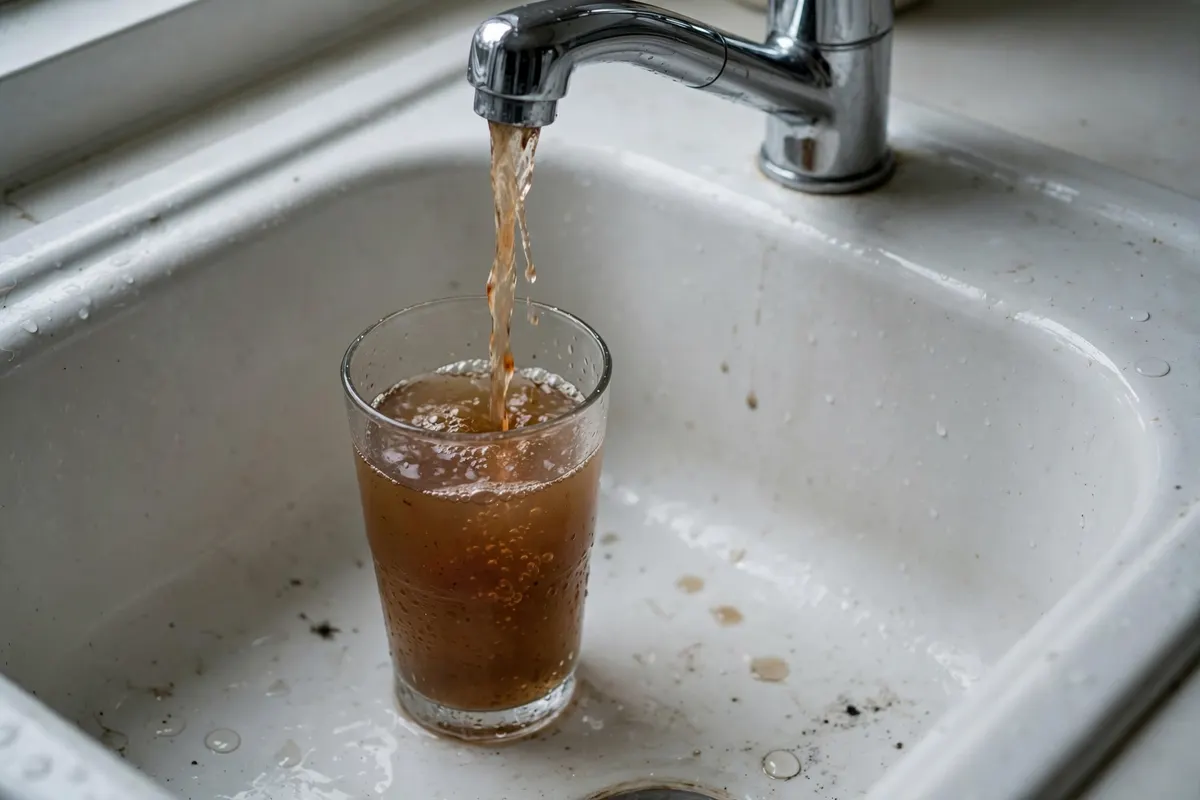
Water changes color before pipes fail, and the shade is a clue. This guide decodes what brown, yellow, black, and blue green water usually mean in Carson and South Bay homes, which checks are safe to run, and when discoloration is really a countdown to a leak.
Discolored water in Carson most often means material is leaving the inside of your plumbing: rust from aging galvanized pipe, sediment stirred up from the water heater, or corrosion products from copper. Color that shows only in hot water points at the water heater. Color at every tap after nearby street work is usually temporary and clears with flushing. Color that keeps returning at your taps only is your pipe system asking for attention. Call (123) 456-7890 if it persists beyond a day of flushing.
Clear water is easy to ignore, which is exactly why color changes unsettle people. Something inside the system has started moving that did not move before: rust that lined a pipe for decades, sediment that settled in a tank, or minerals knocked loose by a pressure change. The water is not just dirty. It is carrying evidence, and where the color shows up, when it appears, and how long it lasts all narrow down which part of the system produced it.
Two patterns matter most. Discoloration that arrives suddenly, at every tap, right after street work, a hydrant flush, or a nearby main break is usually the city supply stirring up its own mains, and it clears with a short flush. Discoloration that belongs to your house alone, that returns morning after morning or never fully leaves, is generated inside your own plumbing, and it will not improve on its own. The checks below separate the two before you spend anything.
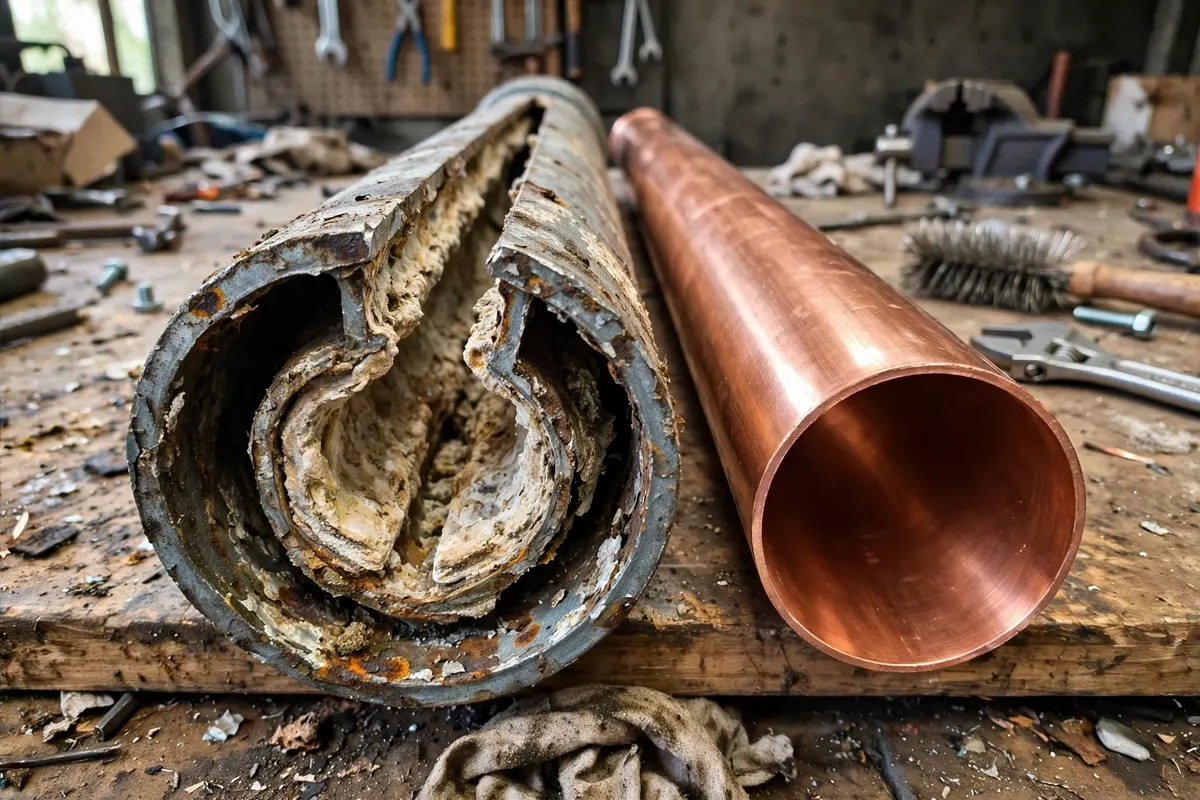
Brown, orange, and yellow water is rust, and in Carson it almost always means galvanized steel somewhere in the system is breaking down. The inside of galvanized pipe rusts as its coating fails, and loose rust washes out whenever flow changes direction or speed. Homes with original galvanized lines see it first in the morning draw or after a vacation, when rust has had quiet hours to loosen. When brown water becomes a regular guest, the pipe wall producing it is thinning toward pinholes.
Hot side discoloration tells a different story. A water heater collects sediment at the bottom of its tank year after year, and a rusting tank or a spent anode rod tints hot water tea colored while the cold side runs clear. That split, dirty hot and clean cold, is nearly diagnostic on its own, and it is why the hot cold comparison is the first check we recommend.
Blue green staining is copper talking. Acidic water or aggressive water chemistry slowly dissolves copper pipe, leaving blue green marks in sinks and tubs and, in advanced cases, pinhole leaks in the thinned walls. Black specks or grit usually come from crumbling rubber parts, like old flex connector linings and valve washers, or from manganese in the supply. Each color maps to a material, and each material maps to a fix.
Fill a clear glass from the cold tap first thing, before the house starts using water, and let it sit for a few minutes. Note the color, whether particles settle to the bottom, and whether it clears from the bottom up or the top down. Then run the cold tap for two minutes and fill a second glass. Water that runs clear after a short flush and stays clear points to loose material near the fixture or a temporary supply disturbance. Water that never quite clears, or that is dirty again tomorrow, is being produced inside your system.
Compare hot and cold side by side, and compare taps. Dirty hot water only means the water heater. Dirty water at one tap means that branch or fixture. Dirty water everywhere means the main run, the meter side, or the city supply. Ask a neighbor on the same street whether their water changed too; a yes on the same morning usually means the cause is out in the street and temporary.
Until you know the cause, keep discolored water off laundry, since rust stains fabric in a way that rarely washes out, and hold off on drinking water that looks or tastes off. Do not run the hot tap to try to flush the system clean; that just pulls sediment through the water heater and spreads it to every hot fixture in the house. Flush from the cold side, starting at the lowest tap or an outside hose bib.
Most discoloration is a slow story. A few combinations are not. Brown water that arrives suddenly with a pressure drop can mean a main has broken nearby, either in the street or on your own line between the meter and the house, and soil is entering the system. That pairing earns a call the same day, to us and to the water utility, because a broken pressurized line is also a leak that is already damaging ground and foundation.
Sewage changes the category entirely. Water or drainage with a sewage smell, gray or black water backing into tubs and floor drains, or discoloration paired with gurgling drains is a sewer problem, not a supply problem. Keep people and pets away from it, do not run more water into the system, and treat cleanup as contaminated until a plumber confirms otherwise. Those are the boundaries: rust is a pipe story, sewage is a health story.
We sample before we speculate. Water drawn at the hose bib nearest the meter tells us what the street is delivering. Water at indoor taps, hot and cold, tells us what your system adds to it. Comparing the samples locates the source to the supply, the house piping, or the water heater without opening a single wall.
From there we map your pipe materials, check the water heater by drawing from its drain valve, and pressure test the lines if the samples suggest active corrosion. The remedy matches the source: a heater serviced or replaced, a street disturbance documented so you can stop worrying, or a galvanized system that has started shedding in earnest. For that last case we will walk you through what repiping services would replace and what it would leave alone, in writing, before you decide.
Straight answers before you call.
Describe what your pipes are doing and we will point you to the right next step.
Call (123) 456-7890Because the cold supply feeding the house is clean, and the tint is being added after the water enters the water heater. Sediment built up in the tank, a rusting tank wall, or a used up anode rod all color hot water while cold taps run clear. A draw from the heater drain valve confirms it in minutes.
It usually means loose material was sitting in a section of pipe and got washed out by flow: rust loosened overnight, sediment near a fixture, or disturbed mains after street work. Occasional clearing is common. If you have to repeat the flush every morning, the pipe is producing new material daily, which points to active corrosion rather than a one time disturbance.
Rust tinted water can set orange stains in fabric that standard washing will not fully remove, and repeated exposure marks porcelain and grout over time. Run laundry only after a cold flush comes out clear, and if a load has already been stained, do not put it in the dryer, since heat sets rust stains. Rewashing with a rust remover product gives the best recovery.
Usually yes, with a little help. Work on mains stirs up sediment in the city lines, and the standard remedy is flushing your cold taps, starting with an outside hose bib or the lowest faucet, until the water clears. If it has not cleared after a day of normal use and a good flush, or your neighbors are clear and you are not, the cause is likely inside your own system.
Not necessarily. Color can come from one stretch of pipe, one fixture branch, or the water heater alone, while the rest of the system is sound. Sampling at the meter side tap, then hot and cold indoors, locates the source before anyone talks about scope. Plenty of discoloration cases end with a heater service or a single branch replaced.
Water moving when every tap is closed means water is going somewhere it should not: a hidden leak, a running toilet, or an irrigation line.
A bill that climbs while your habits stay the same is often the first written record of a leak that has not shown itself yet.
Whole home repiping in copper or PEX when the old lines reach end of life.
Burst pipes shut off, located, and repaired fast, day or night.
Persistent discoloration is a pipe condition report. Call now and we will find which part of your system is shedding.
Call (123) 456-7890