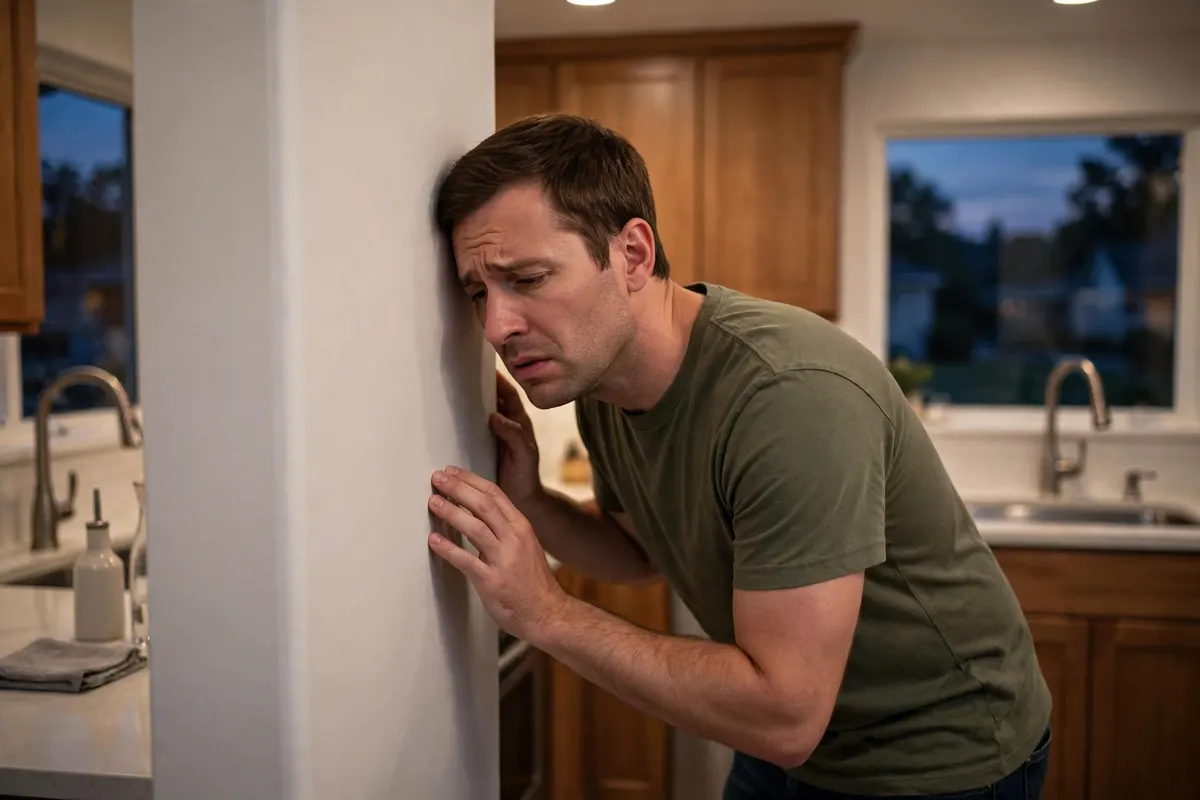
Few plumbing signs are as useful, or as ignored, as hearing water move in a quiet house. This guide covers where that sound usually comes from in Carson and South Bay homes, the checks that identify the culprit without opening walls, and the combinations that mean you should shut the main tonight.
Hearing water run when nothing is open means water is moving through a pipe and ending somewhere unintended. The usual sources are a hidden supply leak in a wall or under the slab, a toilet that keeps refilling itself, a leaking irrigation line, or a water heater relief valve quietly draining. The water meter settles it: if the leak indicator moves while every fixture is off, water is escaping under pressure. Shut the house valve at the meter and note whether the sound stops. Call (123) 456-7890 to have it traced.
A house at rest should be a quiet plumbing system. Every pipe is full, nothing is flowing, and the meter sits still. When you hear water running in that stillness, through a wall, under a floor, or near the water heater, physics leaves few options: water is leaving a pressurized line through a break, passing a valve that no longer seals, or draining from the system somewhere you cannot see. The sound is not the problem itself. It is the most honest leak alarm your home owns, and it usually starts days or weeks before stains, smells, or bills make the same announcement.
Where you hear it matters. Sound travels through pipe and framing surprisingly well, so a hiss behind the bathroom wall might belong to a leak several feet away. Still, patterns help: a sound that never stops, day or night, suggests a supply line or a toilet. A sound that comes and goes on a schedule often belongs to irrigation or a water softener cycle. A sound paired with a warm floor patch points under the slab. You do not need to locate the leak yourself. You only need to characterize the sound well enough that the first tests aim at the right system.
The toilet is the most common soloist. A worn flapper lets tank water seep into the bowl continuously, and the fill valve tops the tank up in short bursts or a constant whisper. Because it happens inside a fixture you use daily, it hides in plain sight for months. Next is the hidden supply leak: a pinhole in a wall line, a slab leak under concrete, or a main line crack between the meter and the house, each producing a steady hiss or rush that never takes a break.
Irrigation is the outdoor suspect. A cracked lateral line, a valve that no longer closes fully, or a broken sprinkler head underground can run water into the soil on a timer you never hear indoors, though the sound carries through the main line into the house. The water heater contributes its own sounds: a relief valve weeping into its drain line, or a tank refilling after a leak on the hot side somewhere in the house.
The last two are easy to overlook. A hose bib left cracked open or split by age dribbles down an exterior wall for weeks. And a softener or filtration system stuck in its regeneration cycle can push water to a drain for hours. Each source has a test, and most tests take minutes. The mistake is not misidentifying the source. It is turning up the television and letting the sound become background.
The meter test comes first because it divides the world in two. Turn off every fixture, the ice maker, irrigation, and the softener. Watch the meter dial or leak indicator for two minutes. Movement means pressurized water is leaving somewhere. No movement while you still hear sound suggests the noise is a drain, a neighboring line, or a fixture using water in a way that does not register as a leak, though most real culprits do register.
If the meter moves, isolate the house from the yard. Close the house shutoff valve, usually where the main enters the home, and watch the meter again. A meter that stops says the loss is inside the house or under its slab. A meter that keeps moving with the house closed says the leak is on the main line between the meter and the house, or in the irrigation, so close the irrigation valve too and retest. This simple sequence, house on, house off, irrigation off, sorts most mysteries into the right third of the system.
For toilets, lift each tank lid and look and listen. Water trickling over the overflow tube, a fill valve that sighs every few minutes, or a bowl that ripples on its own all convict that toilet. Mark the tank water level, wait twenty minutes without flushing, and check whether it fell. Close one toilet supply valve at a time and listen to the wall sound between each; when the house goes quiet, you have found your runner.
A faint, steady sound with a slow meter is a scheduled visit. A loud rush, a meter spinning fast, or sound arriving together with wet drywall, warm floors, or falling pressure is an active break, and the correct move is to close the main valve now and call (123) 456-7890. Every hour a pressurized leak runs, it is sandblasting its own hole bigger and soaking material that will later need drying or replacing.
Respect two boundaries while you investigate. If the sound is near the water heater and water is on the floor around electrical outlets or the unit itself, stay clear of the water and say so when you call. And if the noise comes with a sewage smell or drains gurgling, do not keep running water into the system; sewer problems get worse with every flush. A quiet house test is safe. Digging, cutting, or panel work is where homeowner diagnosis should stop.
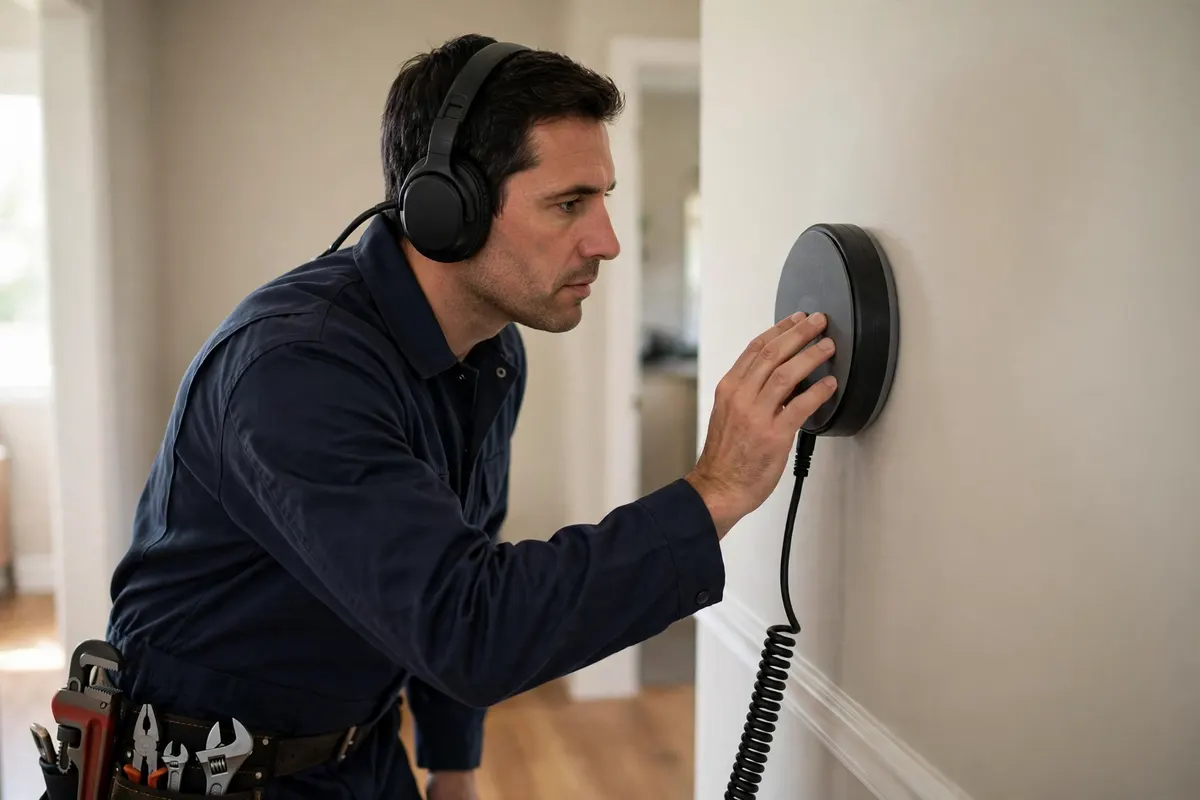
Professional leak tracing starts where your checks left off. We repeat the meter isolation to confirm which third of the system is losing water, pressure test the suspect lines to prove they cannot hold, and then bring ears better than ours to the wall. Acoustic listening equipment amplifies the sound a leak makes under pressure, letting us grade its loudness along a wall, floor, or yard run and converge on the spot where it peaks.
Thermal imaging supports the search on hot lines and slab leaks, showing the warm plume water leaves as it spreads under concrete. Once the location is confirmed by two methods, we open the smallest practical access, repair the failed section, and pressure test again to prove the system is tight. That sequence is the heart of our pipe leak detection work: evidence first, opening second, so the repair happens at the break instead of at a guess.
Straight answers before you call.
Describe what your pipes are doing and we will point you to the right next step.
Call (123) 456-7890Close the supply valve behind each toilet, one at a time, and listen after each. If the running sound stops when a particular toilet is closed, that fixture is your culprit, usually a worn flapper or a fill valve that never seals. A pipe leak, by contrast, keeps the meter moving even with every toilet valve closed.
Intermittent sound usually means something cycling: a toilet fill valve topping up a slowly draining tank, an irrigation zone on a timer, a water softener regenerating, or a leak that only flows when pressure peaks at night. Note the times it happens for a day. A pattern tied to the clock points at equipment, while a pattern tied to nothing points back at a leak.
Yes, and this is common. Pressurized water escaping through a small hole makes noise immediately, but the water itself may drain into a wall cavity, under a slab, or into soil for a long time before anything visible appears. Hearing the sound early is genuinely catching the leak early, which is why we treat the report seriously even when the house looks dry.
Close the main shutoff valve, open a low faucet briefly to relieve pressure, and leave the system off overnight if you can. A bucket of water handles a toilet flush or two. Then call in the morning with what you observed: when the sound runs, whether the meter moved, and whether closing the house valve stopped it. That report shortens the trace considerably.
Modern meters have leak indicators sensitive enough to register slow losses, and even a tiny drip moves the main dial given enough observation time. Watch the indicator for a full two minutes, and if in doubt, note the meter reading at night and again before any morning water use. Any change with the house asleep means water went somewhere.
A bill that climbs while your habits stay the same is often the first written record of a leak that has not shown itself yet.
One lush, soggy patch in an otherwise dry yard usually sits almost directly on top of a leaking underground line.
Hidden leaks found with acoustic and thermal equipment, no guesswork.
Burst pipes shut off, located, and repaired fast, day or night.
That sound is a leak with a head start. Call now and we will follow it to the source.
Call (123) 456-7890