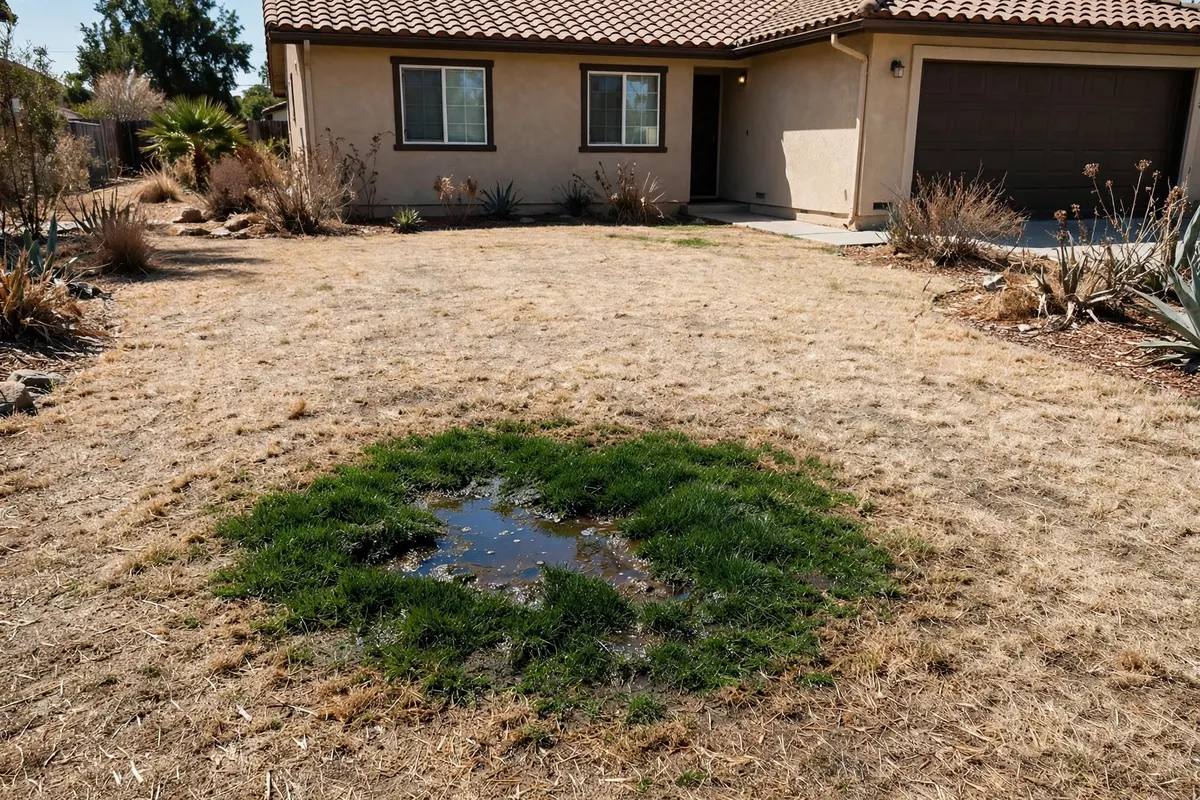
A green, swampy patch in a dry South Bay yard is rarely a gardening mystery. This guide explains how to tell a leaking water main from a sewer lateral or an irrigation break, the checks that need no shovel, and the signs that a wet spot is becoming something worse.
A wet spot in the yard that never dries usually sits over a leaking underground pipe: the main water line running from the meter, a sewer lateral, or an irrigation line. Clean water leaks stay wet constantly and the meter moves. Sewer leaks often smell and grow the greenest grass on the street. Irrigation leaks follow the watering schedule. Note whether the spot is always wet or only after watering days, and check the meter with everything off. Call (123) 456-7890 to have the line located before any digging.
Southern California yards dry out predictably. When one patch refuses to, staying green, soft, or outright puddled while the rest of the lawn fades, water is arriving there from below on a schedule your sprinklers do not control. Underground pipes are the usual delivery system: the pressurized main bringing water from the meter to your house, the sewer lateral carrying it away, and the irrigation lines in between. Each leaks with its own signature, and reading that signature correctly decides both the repair and how urgent it is.
Location is the first clue. Draw an imaginary line from your water meter at the curb to where the main enters the house; main line leaks surface along that path. Sewer laterals run from the house toward the street as well, usually on their own line to the city main. Irrigation laterals branch everywhere the sprinklers reach. A wet spot sitting on one of those routes, especially one that keeps expanding, deserves to be treated as a pipe problem until the checks below prove it is only weather, runoff, or a neighbor's drainage.
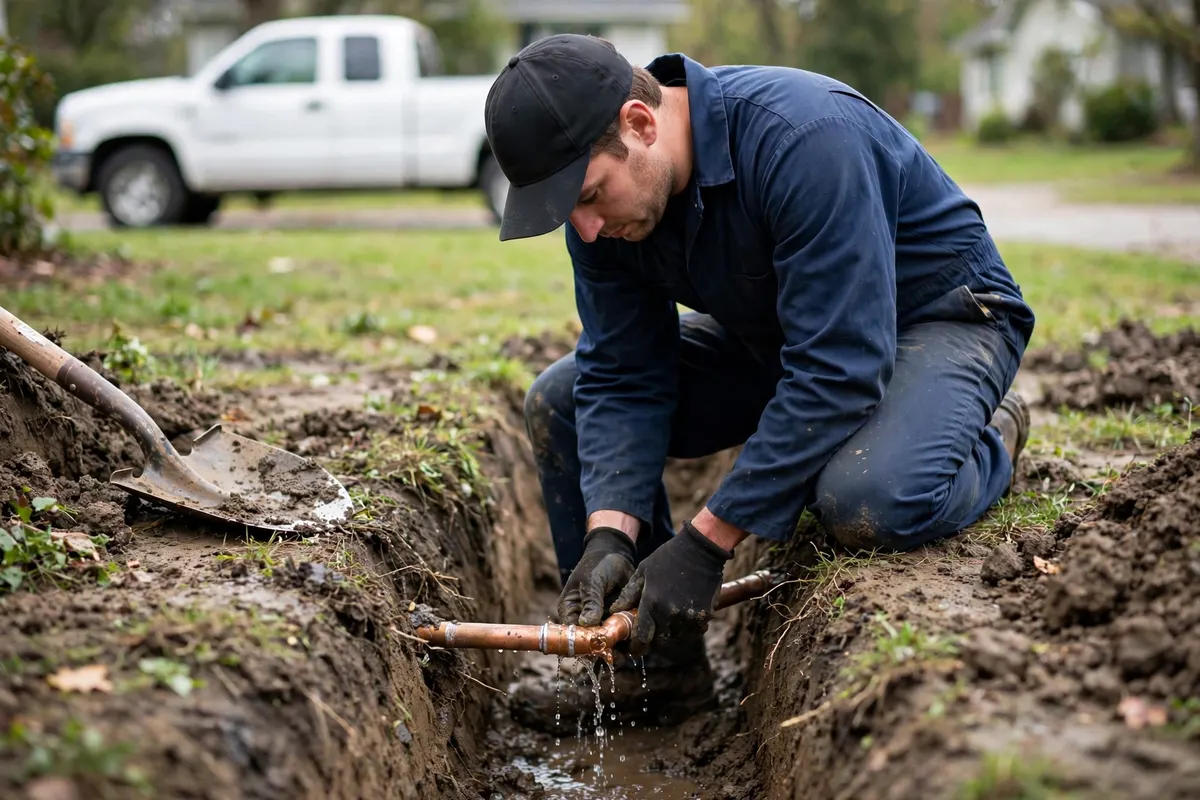
A main line leak is the tireless one. The pipe is pressurized day and night, so the spot stays wet constantly, the grass over it grows like it is being fed, and in advanced cases water sheets or bubbles at the surface. Because the water is clean, there is usually no smell, just mud that never firms up and a meter that never fully rests. Main lines in Carson and the surrounding tracts are often as old as the homes they serve, and corrosion, ground movement, and roots all take their turn at them.
A sewer lateral leak announces itself differently. The water is wastewater, so there may be a sewage odor near the spot, the grass grows almost aggressively green, and flies gather. Flow is intermittent rather than constant, following showers, laundry, and flushes. Sewer water is a contaminant, so this is the one wet spot to keep people and pets away from until it is assessed. Clay and cast iron laterals in older South Bay neighborhoods crack at joints and invite roots, and the leak often surfaces at a low point downhill from the actual break.
Irrigation leaks keep office hours. The spot turns wet after watering cycles and begins drying between them, though a valve that seeps can keep it damp around the clock. Broken heads, cracked laterals, and stuck valves are the usual causes, and they waste water in the pattern of the timer rather than the pattern of the household. A spot that syncs with the watering schedule is good news: it is the cheapest of the three to find and fix.
Run the schedule test first. Turn the irrigation controller off entirely for several days while watching the spot. If it dries out, the irrigation system owns the problem. If it stays wet with irrigation off and no rain, the water is coming from a line that is always on: the main, or the sewer. Note whether the spot pulses with household water use, which points to the lateral, or ignores it completely, which points to the pressurized main.
The meter makes it official. With every fixture off and irrigation isolated at its valve, a moving meter means the main line is losing water between the meter and the house. A still meter with a constantly wet spot moves suspicion to the sewer lateral or to water arriving from outside your system entirely, like a neighbor's line or a high water table after storms. Look inside your meter box as well; standing water in the box itself often means the leak is close to the street end of the line.
Two boundaries matter here. If there is any sewage smell or the water looks gray or dark, keep off the area and keep it off shoes and paws until it is checked. And never start exploratory digging to find a line yourself: buried gas, electric, and water utilities share these yards, and California's 811 service marks them at no charge before any real digging. Diagnosis first also means the eventual dig happens once, in the right place.
Water moving through soil moves soil. A pressurized main leak washes fines out of the ground around the break, slowly hollowing a void that the surface hides until it cannot. Warning signs that a wet spot is graduating: the ground feels spongy or gives underfoot, pavement or a walkway nearby begins to crack or settle, the puddle grows despite no change in weather or watering, or water starts surfacing fast enough to run.
Sewer leaks carry the same clock with an added health edge, since the void they erode is filled with contaminated water. A wet spot near the foundation that is undermining a slab edge or a driveway deserves a prompt call rather than a watchful month. When in doubt, treat bubbling water, sinking ground, or sewage at the surface as same day problems: shut the house water off if the main is suspected, keep the area clear, and call (123) 456-7890.
The goal is to dig once. We begin with isolation at the meter: irrigation off, house off, watching which configuration stops the loss. For the main line, pressure testing confirms the run cannot hold, and acoustic equipment listens along its path from the meter to the house, grading the leak noise until it peaks over the break. For a suspected lateral, a camera run through the line shows cracks, offsets, and root masses directly, along with exactly where they sit.
Only then does a shovel come out, in the smallest trench the repair allows. A main line section gets replaced and pressure tested before the soil goes back. A lateral problem may be a spot repair, a root clearing with follow up camera proof, or a planned replacement of a failed stretch, the same work covered on our sewer line repair page. You see the camera footage or the test readings yourself, so the dig is never based on a hunch.
Straight answers before you call.
Describe what your pipes are doing and we will point you to the right next step.
Call (123) 456-7890Clean main line water has no smell, keeps the spot wet around the clock, and moves your water meter while the house is at rest. Sewer water often carries an odor, grows unusually lush grass, and pulses with your household drainage rather than running constantly. When in doubt, treat it as sewer water: keep off it and have it checked.
That timing is the fingerprint of an irrigation problem: a cracked lateral, a broken head, or a valve that does not fully close, all flowing only when the system runs or in the hours after. Turn the controller off for a few days to confirm the spot dries, then run zones one at a time and watch which zone recreates it.
Yes. In sandy or well drained soil, a modest main line leak can pour downward and disperse without ever puddling at the surface, showing up only as a higher bill and a restless meter. The wet spot is the stage where the soil can no longer hide it. A meter that moves at rest is reason enough to investigate even a perfectly dry yard.
In most South Bay cities, the homeowner owns and maintains the water line from the meter to the house, while the utility owns the meter and everything on the street side of it. Sewer laterals follow a similar split. If the leak turns out to be on the utility side, we will show you the test results so you can hand the problem to the right owner.
Usually the opposite. The wettest point is often downhill from the actual break, so an unguided dig can open healthy ground while missing the pipe entirely, and yards hide gas and electric lines that must be marked first. A location test and a camera run cost a fraction of a misdirected trench and turn the real dig into a single, targeted opening.
A brown ring, bubbling paint, or a drip from above almost always traces back to water escaping in the floor or pipes overhead.
Weak showers and slow filling fixtures usually trace to corrosion inside old pipe, a tired pressure regulator, or water escaping the system.
Camera inspection and repair for cracked, root filled, and collapsed sewer lines.
Burst pipes shut off, located, and repaired fast, day or night.
Underground leaks only grow. Call now and we will locate the line before the shovel comes out.
Call (123) 456-7890