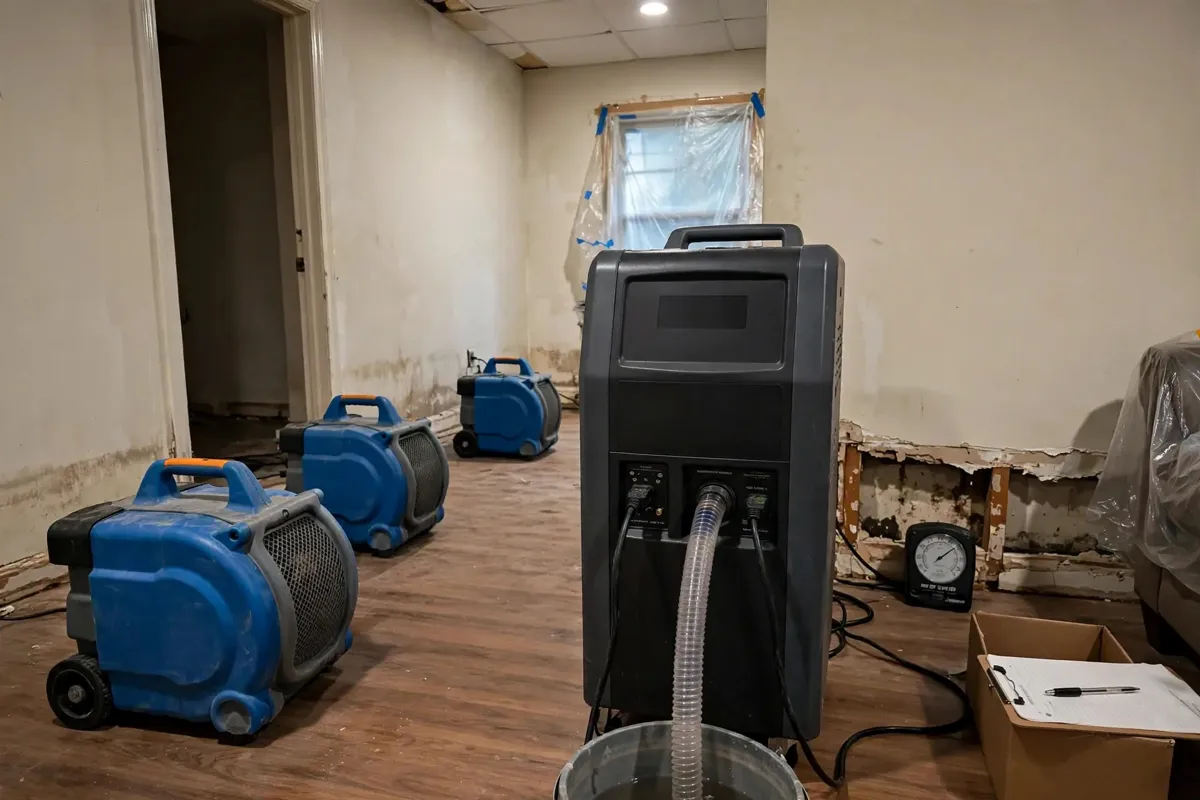
The First Hours Decide the Outcome
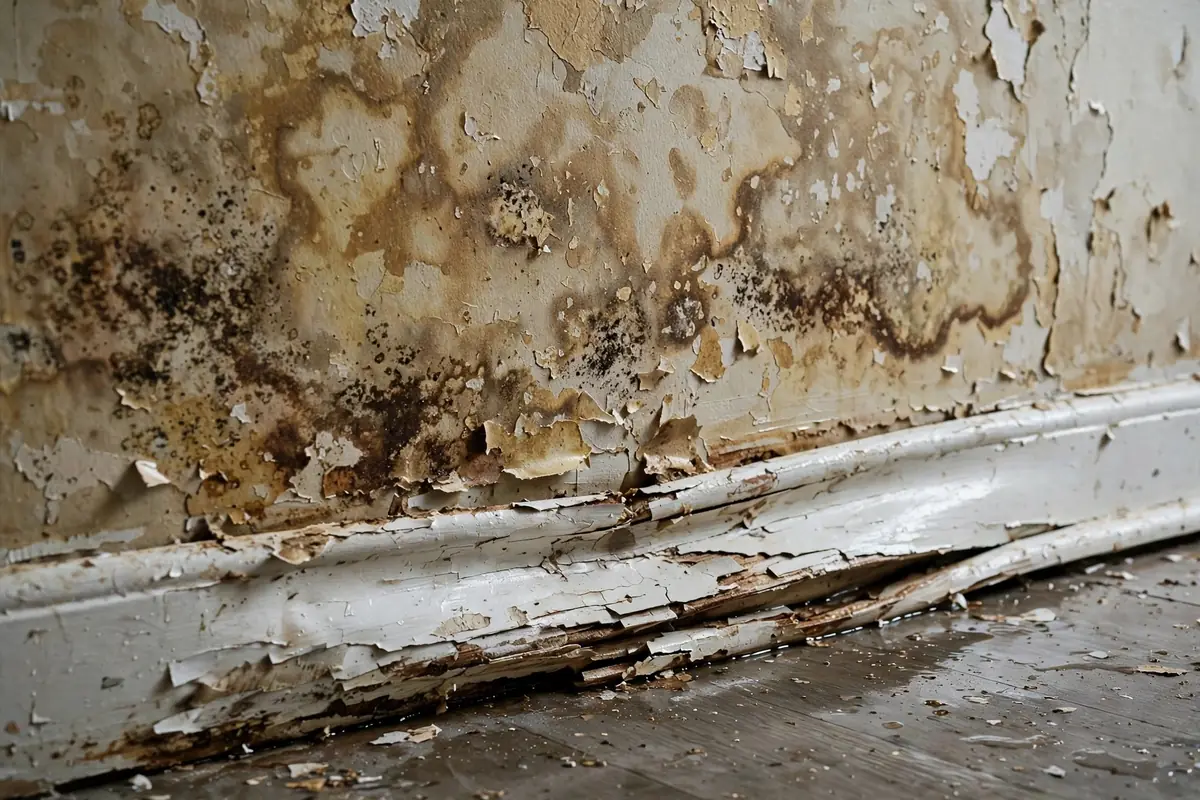
Water damage follows a clock. In the first hour, water spreads across floors and wicks into baseboards and drywall. Within several hours, wood flooring begins to cup, carpet padding saturates, and particleboard cabinets swell in ways that do not reverse. Somewhere in the one to two day window, mold spores that are always present in household air find wet material and start colonizing it. That timeline is why the first 24 hours matter so much more than the following week. Every hour of standing water in the first day translates into more material that must be removed rather than dried, so speed with extraction and airflow pays for itself many times over.
Extraction Beats Evaporation
Fans alone cannot handle pooled water. Start with removal: a wet vacuum for standing water, towels for small areas, and mopping toward the lowest point or a drain. Pull carpet back to check the padding, because padding holds water like a sponge and usually has to go even when the carpet itself can be saved. Check inside sink cabinets and behind the water heater, two places water collects unnoticed. A moisture meter confirms which walls are actually wet, since drywall can look fine while the insulation behind it is soaked. Removing baseboards lets wall cavities dry far faster, and small drilled holes at the base of a wet wall let trapped water escape rather than sit against the framing.
Drywall, Flooring, and What Can Be Saved
Clean water from a supply line is the most forgiving kind of indoor flooding, and fast action saves most materials. Solid wood and tile often dry in place with good airflow and a dehumidifier. Laminate flooring over a soaked underlayment usually cannot be saved because the layers trap moisture against the subfloor. Drywall that stayed wet for many hours or that feels soft loses its strength and grows mold inside the wall, so cutting out the wet section is often smarter than hoping it dries. In Carson homes with slab foundations, water also migrates under flooring along the concrete, so checking rooms beyond the obvious wet one prevents a surprise discovery weeks later.
Preventing Mold After the Water Is Gone
Mold prevention is really moisture prevention. Keep fans and a dehumidifier running until a moisture meter shows wall and floor materials back at normal dry readings, not just dry to the touch. Clean hard surfaces with detergent, discard soaked cardboard, paper, and padding, and bag debris so spores do not spread through the house. Watch the repaired area for the next few weeks: a returning musty smell means moisture remains somewhere hidden, often inside a wall cavity or under a cabinet toe kick. The repair itself must be verified dry and pressure tested before walls close, because sealing damp material behind new drywall all but ensures the problem you were trying to avoid.
Document Everything Before Cleanup Erases It
Photograph and video the damage before you move or discard anything: the burst pipe, every wet room, and close ups of damaged flooring, cabinets, and belongings. Keep receipts for fans, dehumidifier rentals, and any materials you remove, and keep a sample of damaged flooring if flooring replacement may be claimed. This documentation takes ten minutes during the busy first day and is nearly impossible to recreate later. Once the area is dry and documented, the plumbing repair and the restoration can proceed in the right order: fix the supply line, confirm it holds under water pressure, then rebuild. Carson Pipe Pros at (123) 456-7890 can walk you through what the repair side needs first.
Do not forget the rooms water reaches quietly. Check closets that share a wall with the burst, the cabinet under every sink on the same supply line, and the base of the water heater platform. Water wicks sideways through drywall paper and along framing far beyond the visible puddle. A quick pass with a moisture meter, or a careful hand along baseboards feeling for cool damp spots, catches the spread early. The goal of the first day is simple: no standing water anywhere, air moving everywhere it was wet, and nothing sealed up while it is still damp.
Questions About Water Damage After a Pipe Bursts
How long does mold take to grow after a pipe burst?
Mold can start colonizing wet drywall, carpet backing, and wood within a day or two, which is why extraction and drying need to start immediately.
Can wet drywall dry on its own?
Lightly damp drywall with strong airflow sometimes dries safely. Drywall that is soft, sagging, or stayed soaked for many hours usually needs to be cut out.
Should I throw away wet carpet padding?
Yes, in most cases. Padding holds water against the subfloor, dries poorly, and is a common mold source, while the carpet above it can often be cleaned and saved.
How do I know when everything is truly dry?
A moisture meter reading in the normal dry range for wood and drywall is the reliable test. Surfaces can feel dry while wall cavities are still wet.