Professional drain cleaning for Carson and South Bay homes.
A drain that keeps slowing down is telling you buildup is narrowing the pipe, not that a single clog happened by chance. Carson Pipe Pros clears kitchen, bathroom, laundry, and main lines in Carson with a drain snake or hydro jetting matched to the pipe and the blockage. Call (123) 456-7890 when water stands, drains gurgle, or odors keep returning.
Every home seems to have one: the bathroom sink that slows every few months, the shower that pools around your ankles, the kitchen line that backs up after big cooking days. A clog that returns to the same fixture is rarely about what went down the drain last week. It is about what has been building on the pipe walls for years, narrowing the passage until ordinary use finally overwhelms it.
Pouring cleaner down the drain or plunging may move the soft center of a blockage, but the rough, greasy, or scaled ring on the wall of the pipe stays behind and catches the next load faster. That is why the interval between clogs keeps shrinking. Professional cleaning addresses the pipe wall itself, restoring the full inside diameter so the drain behaves like it did when the line was new.
Many drains we clean have a history of home attempts behind them, and that history is useful rather than embarrassing. A plunger that worked for a while, a hand crank snake from the hardware store, a bottle of gel cleaner last month: each result tells the technician how solid the blockage is and how deep it likely sits. A clog that shrugged off a short home snake is probably beyond its reach, at a bend, a junction, or in the larger branch line where proper cable size and cutting heads matter. Sharing what has already been tried saves time and shapes the first tool through the cleanout.
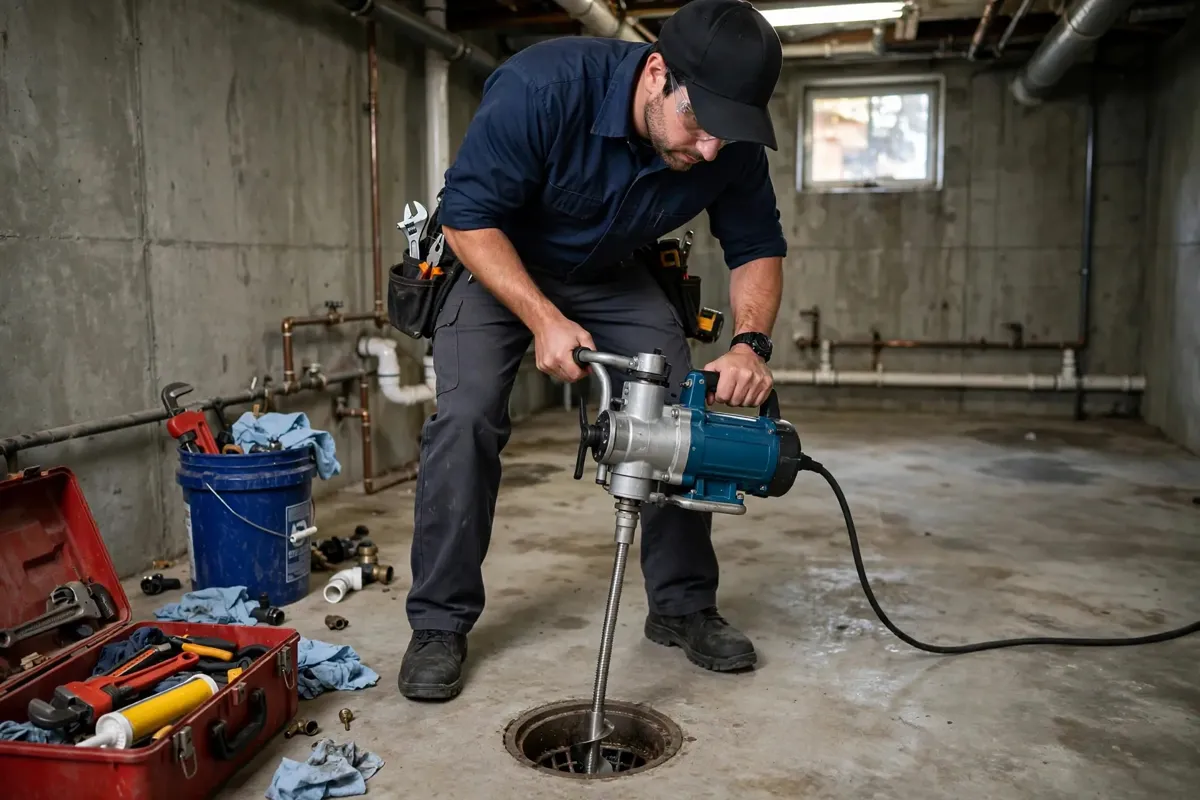
A drain snake, a flexible cable with a cutting or retrieving head, is the right tool for many clogs. It breaks through hair, paper, and soft blockages, and it can pull back objects that should never have gone down the line. For a single fixture drain in good condition, snaking through the fixture access or a cleanout is efficient, targeted work that solves the immediate problem and tests how the line drains afterward.
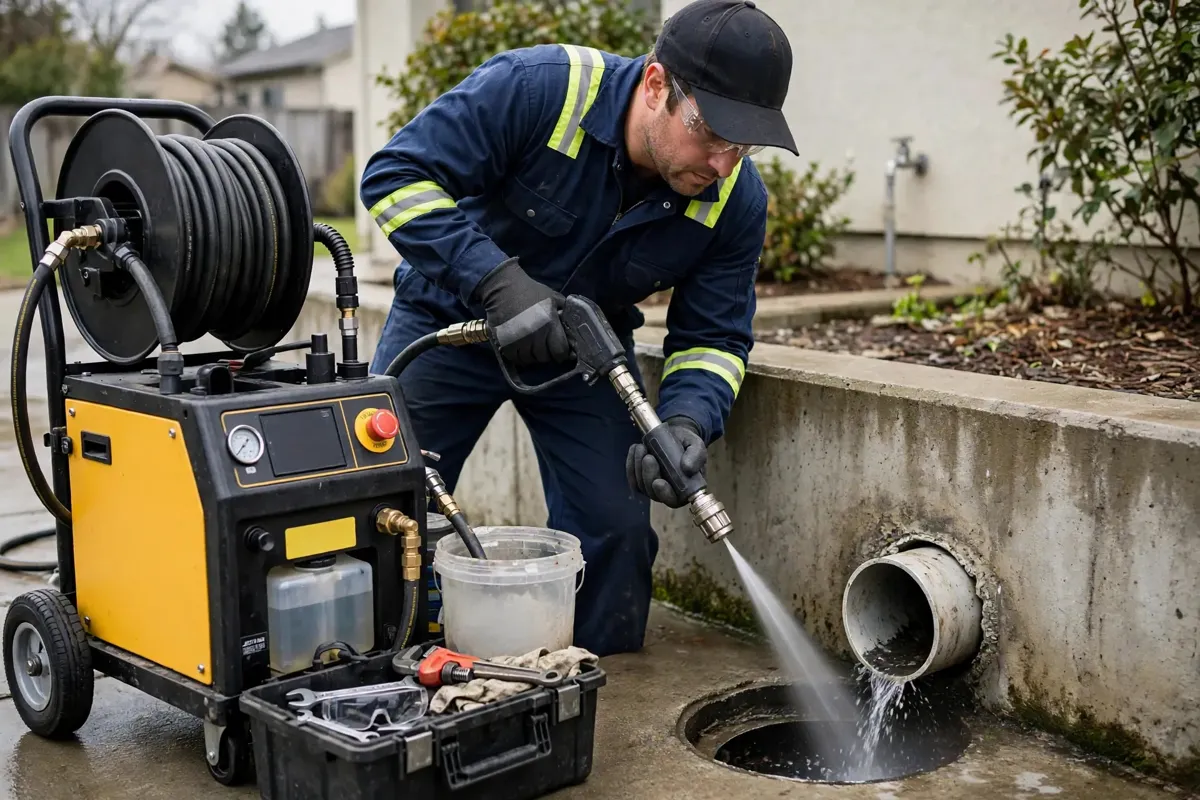
Hydro jetting does a different job. It scours the pipe walls with high pressure water, stripping grease, scale, soap buildup, and root hairs from the full circumference of the line. Kitchen lines coated in cooking grease, main lines with years of buildup, and lines serving homes across Carson, Long Beach, and Gardena with hard water scale respond best to jetting. The choice depends on pipe material and condition, since fragile, corroded cast iron or thin ABS needs a gentler approach than sound PVC.
Cleaning also reveals what plain clearing hides. A cable that comes back coated in black grease tells one story, while one that returns with fine root hairs or grit tells another about the condition of the pipe downstream. When a main line cleans too easily or the cable meets an odd resistance, a sewer camera after cleaning shows the walls that caused the trouble, a belly, a crack, or a joint offset, while the line is open enough for a clear view. That pairing of cleaning and seeing is how repeat problems get solved instead of rescheduled.
Kitchen drains collect cooking grease that coats the pipe while warm, then hardens as it cools farther down the line. Add food particles, coffee grounds, and detergent residue, and the passage narrows year by year. Hard water in the South Bay contributes mineral scale that roughens the surface, giving grease and debris even more to grip onto inside copper, cast iron, and plastic lines alike.
Bathroom drains have their own recipe: hair bound with soap scum in tubs and showers, and toothpaste and shaving residue in sinks. Laundry drains clog on lint and detergent buildup, often at the standpipe or where the line turns. Each material behaves differently under cleaning, which is why the technician asks what the drain serves and how it has been acting, rather than treating every slow drain as the same job.
Two fixtures deserve special mention. A garbage disposal does not make food vanish; it grinds waste into particles that still travel the kitchen line, and fibrous or starchy foods swell and mat in slow sections. Laundry drains work hard in Carson homes where machines run daily, and their lint heavy discharge coats the standpipe and branch line in a matted layer that catches everything else. Knowing which fixtures feed a problem line helps the technician size equipment correctly and helps the homeowner adjust the few habits that genuinely change how fast buildup returns after a thorough cleaning.
Why does my drain keep clogging in the same place? Because something about that stretch of pipe invites buildup: a rough corroded section of cast iron, a slight belly where water slows and drops its load, a poorly aligned joint, or grease and scale narrowing the wall. Cleaning that only opens a hole through the clog leaves the invitation in place, so the clog returns on schedule.
Diagnosis separates a cleaning problem from a pipe problem. If a drain snake or hydro jetting restores full flow and the line stays clear, buildup was the story. If the same spot clogs again quickly, a sewer camera through the cleanout can show the belly, offset, or damaged section causing it, and the conversation shifts from repeated cleaning to a targeted repair of that section.
Habits play a supporting role, not the lead. Grease wiped from pans before washing, hair caught by a simple shower strainer, and only toilet paper in toilets all slow buildup meaningfully. When you call (123) 456-7890 about a repeat clog, mention how often it returns and what seems to trigger it, since that pattern helps distinguish wall buildup from a structural pipe issue before tools ever enter the line.
How often should drains be cleaned in a home? There is no single schedule that fits every house, because usage drives buildup. A kitchen line serving a household that cooks daily with oils will narrow faster than one in a home that eats out often, and a bathroom shared by a family will collect hair faster than a guest bath used a few times a month.
A practical approach is responsive rather than calendared: schedule cleaning when drainage first slows, not when it stops entirely. A slow drain is a line asking early, while a fully blocked drain risks backups, overflow at fixtures, and water damage at the angle stop and supply line connections under sinks if a pressurized leak starts while attention is on the clog.
Homes with known conditions benefit from planned service: older cast iron lines in Carson neighborhoods, lines with a history of root intrusion at the cleanout, and kitchen lines with heavy grease use. During a cleaning visit, the technician can advise honestly whether your lines suggest an occasional cleaning pattern or a recurring one, based on what came out of the pipe and how the line drained afterward.
Drains also give fair warning when homeowners know the language. A gurgle from a sink when the toilet flushes means air is being pushed where it should flow cleanly. A drain that smells in the morning after sitting overnight is holding organic buildup near the fixture. Water that rises in a shower while the washing machine empties points to a shared branch reaching its limit. None of these require panic, and all of them reward an early call, because a line cleaned while it still drains is faster, cleaner work than a line opened after it has backed sewage into a tub.
Straight answers before you call.
Describe what your pipes are doing and we will point you to the right next step.
Call (123) 456-7890Grease coats pipe walls gradually even with careful habits, and hard water scale roughens the surface so buildup grips. Cleaning the pipe walls restores full flow in a way plunging cannot.
It depends on condition. Sound pipe handles jetting well, while badly corroded cast iron may need snaking or repair instead, which is why pipe condition is checked before choosing the method.
Cooking grease, wipes of any kind, paper towels, and food scraps without a disposal rated for them are the most common causes of avoidable blockages in homes.
That pattern points to the main line rather than individual fixtures. A sewer camera inspection through the cleanout can show whether roots, buildup, or damage are responsible.
Chemical cleaners often clear only a small path, can damage older pipe and fittings, and make later professional work less safe. Mechanical cleaning removes the buildup itself.
Burst pipes shut off, located, and repaired fast, day or night.
Hidden leaks found with acoustic and thermal equipment, no guesswork.
Water extraction, drying, and cleanup after a pipe failure.
Camera inspection and repair for cracked, root filled, and collapsed sewer lines.
Call now and describe what is happening. We will take it from there.
Call (123) 456-7890