Professional sewer line repair for Carson and South Bay homes.
Slow drains throughout the house, gurgling toilets, and sewer odors often point to the main sewer line, not a single fixture. Carson Pipe Pros inspects the line with a sewer camera through the cleanout, shows you what is happening underground, and repairs the failing section. Call (123) 456-7890 for sewer line repair in Carson and the South Bay.
A single slow sink is usually a local clog. When toilets gurgle, tubs drain slowly, and more than one fixture backs up at the same time, the problem is downstream where everything meets: the main sewer line. Sewage backing into a tub or shower, the lowest drains in the house, is the clearest sign the line leaving the home is blocked, broken, or invaded by roots.
Many Carson sewer lines are original to homes built decades ago, in materials like cast iron and clay that age in predictable ways. Cast iron scales and corrodes from the inside, clay joints shift and open, and even ABS lines installed later can sag where soil support washes away. A line does not have to be ancient to fail, but age plus ground movement plus roots explains most of what we find.
A sewer backup is also a health problem, not only a drainage problem. Water that comes up through a tub, shower, or floor drain has traveled the shared line and carries whatever that line carries, so the affected fixtures and floors need proper cleaning and sanitation once flow is restored, not just a mop and fresh water. Children and pets should be kept away from the area until it is cleaned, and porous items that soaked in backup water, like bath mats and stored cardboard, are usually safer discarded than washed. That caution keeps a plumbing repair from becoming a lingering household health complaint.
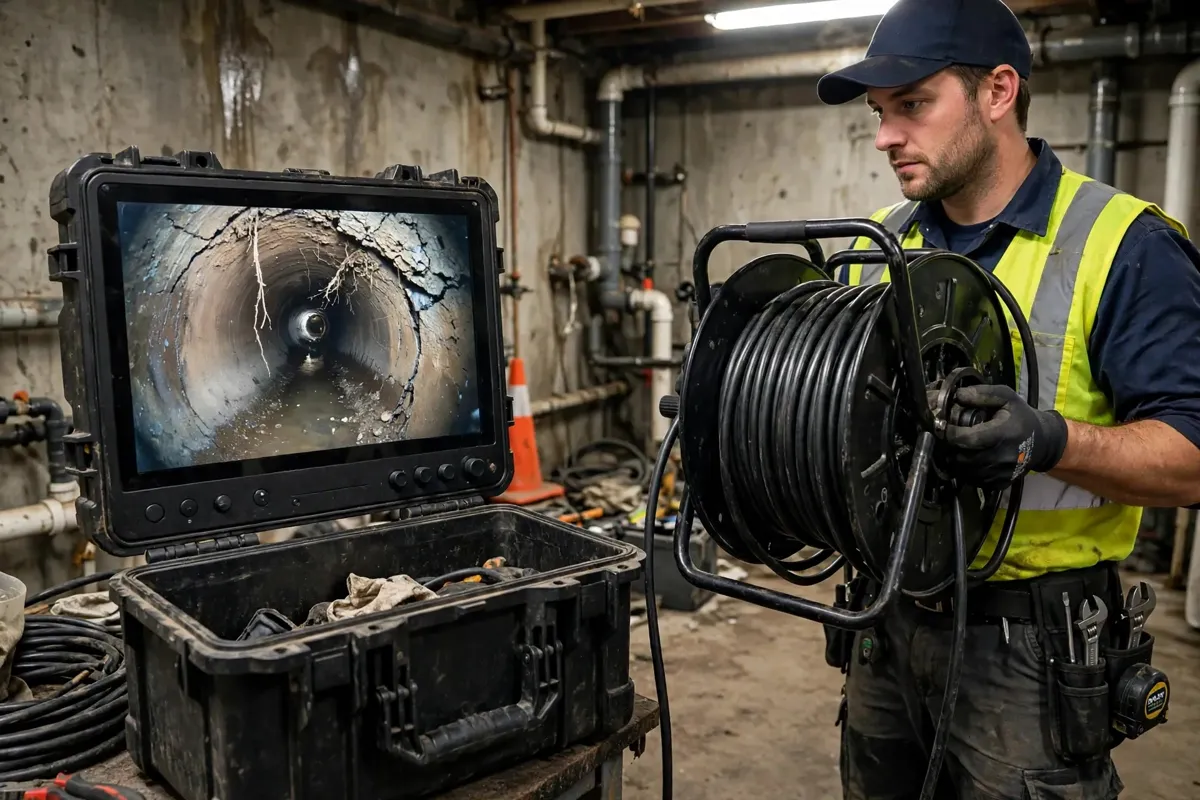
Repair starts with seeing. A sewer camera is fed through the cleanout, the capped access point usually found near the front of the house or in a utility area, and travels the line while the technician watches its condition in real time. Cracks, root masses, bellies holding water, offsets at joints, and corrosion all show clearly, along with a distance reading that marks exactly where each problem sits.
That footage changes the conversation from guessing to choosing. A line blocked by roots in one joint needs a different fix than a line collapsed ten feet from the foundation, and a sewer camera inspection shows which situation you actually have. You see the same images the technician sees, and the repair plan, spot repair, lining where appropriate, or full section replacement, is built on that evidence.
The camera work also creates a record you keep. Footage can be reviewed together at the kitchen table, with the technician pausing at each crack, root mass, and joint offset to explain what it means and what it does not. A locator used above ground marks the exact surface spot over a problem the camera finds, which is how a repair dig stays small and accurately placed days later. Keeping the footage matters if the line needs future work, because the next technician starts from evidence about depth, material, and condition instead of rediscovering the whole system from the cleanout again.
Tree roots are the classic South Bay sewer problem. Roots seek moisture, find a tiny opening at a clay or cast iron joint, and grow into a dense mass inside the pipe that catches everything passing by. Neighborhoods across Carson, Torrance, and Gardena have mature street trees and landscaping planted right over sewer laterals, so root intrusion is a recurring condition to manage, not a rare event.
Ground conditions add to it. Soil shifts, older pipe bedding settles, and a line that once sloped cleanly toward the street develops a low belly where waste and water sit. Hydro jetting can clear roots and buildup and restore flow for a time, while a drain snake can punch through a blockage, but neither fixes a cracked joint or a collapsed section. Clearing buys time. Repair addresses the opening the roots came through.
Construction era explains a lot in Carson. Postwar tracts used clay and cast iron laterals that have now served for many decades, while newer additions and repairs introduced ABS sections that join the older materials at transition fittings, a common failure point where different pipes meet and shift at different rates. A line can therefore be part original, part renewed, with the weakest joint sitting anywhere along the route from the foundation to the street connection. Knowing that mixed history prepares homeowners for camera findings that rarely describe one simple problem from end to end of an older line.
How do you know if a sewer line is broken? Inside the house, the signs are multiple slow drains, recurring backups at the lowest fixtures, sewer odor near drains or in the yard, and toilets that gurgle when other fixtures drain. One fixture misbehaving is usually local. The whole house misbehaving in the same way points at the shared line.
Outside signs matter too: a patch of yard that stays unusually green or soggy over the line path, soil settling or a small sinkhole along the route to the street, and odors near the cleanout. These clues suggest the line is leaking underground, washing soil away as it goes, which can eventually undermine the pipe support and worsen the break.
Confirmation comes from the sewer camera, not from symptoms alone. Symptoms say the line needs attention, and the camera shows whether the issue is roots, a belly, a crack, or a collapse, and how much of the line is affected. Call (123) 456-7890 and describe the pattern you are seeing, especially whether backups involve the lowest tub or shower, since that detail points the inspection the right way from the start.
What is trenchless sewer repair, and when does it work? Trenchless methods repair or replace a line from small access points instead of a long open trench. Where the existing line is intact enough to serve as a host, a liner can be installed inside it to seal cracks and joints. Where a new line must be pulled through, bursting methods can replace the pipe along the same path.
These methods need the right conditions. A fully collapsed line, a severe belly holding water, or a line that has shifted far out of alignment may not be a candidate, and in those cases a targeted excavation over the failed section is the honest fix. The sewer camera findings decide, because the camera shows shape, condition, and slope, not just blockage.
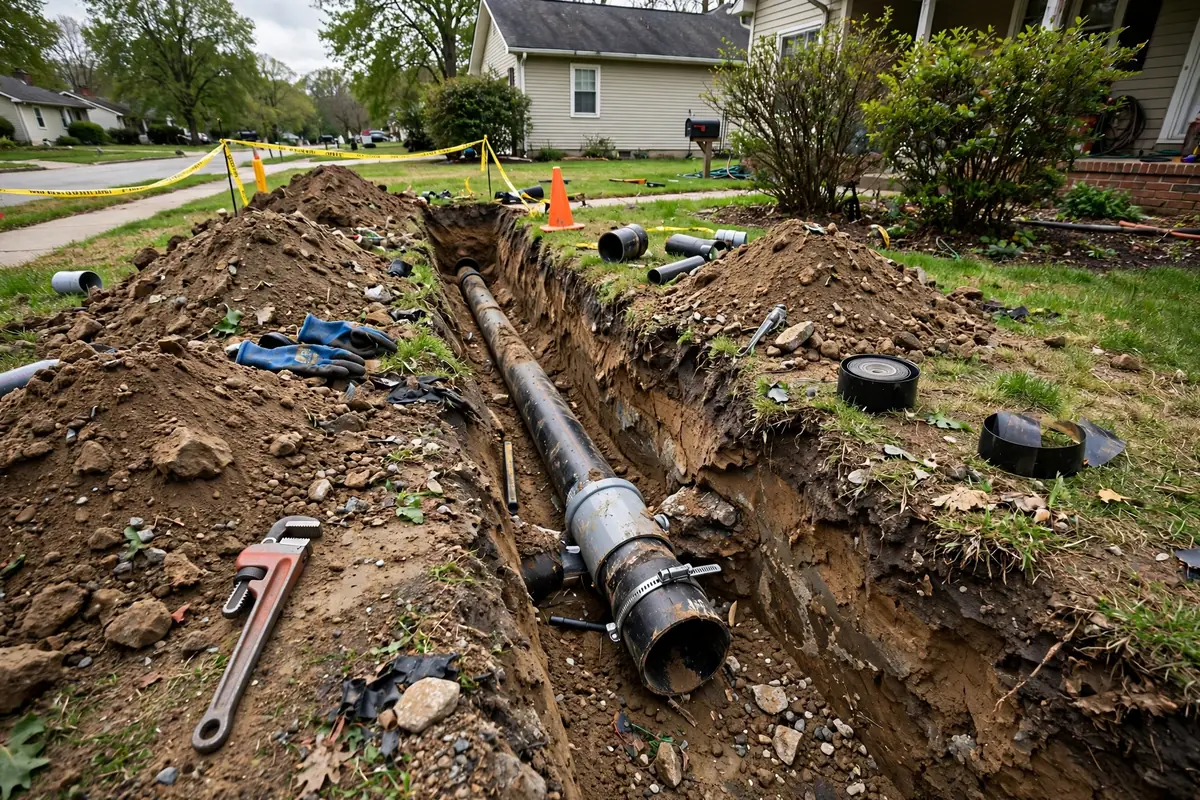
Even with open excavation, modern repair is focused. The camera distance reading places the dig over the failed section rather than along the whole route, protecting landscaping, driveways, and the foundation area near the house exit. After repair, the line is camera checked again and flow tested through the cleanout, so the result is verified before the yard is restored.
After a repair, the line benefits from a simple follow up rhythm. A camera check at a sensible interval confirms whether roots are regrowing at remaining older joints, and hydro jetting on a planned schedule keeps buildup and root hairs trimmed before flow suffers. Landscaping choices matter too, since planting a thirsty tree directly over a lateral invites the next intrusion at the nearest joint. These are manageable details once the major break is fixed, and they turn a repaired sewer from a source of recurring dread into a system with a known condition and a known plan.
Straight answers before you call.
Describe what your pipes are doing and we will point you to the right next step.
Call (123) 456-7890If several fixtures drain slowly or back up together, especially the lowest tub or toilet, the main line is the likely problem. A single slow drain is usually a local clog.
A cleanout is a capped access point on the sewer line, often near the front of the house or by a bathroom wall. It lets a camera and cleaning tools enter the line without removing fixtures.
Roots can be cut and the line cleaned with hydro jetting, which restores flow. If joints are cracked or open, roots will return, so sealing or repairing that section is the lasting fix.
Usually not. Camera inspection locates the failed section precisely, and trenchless or spot repair methods limit digging to where it is actually needed.
Soil settling, poor original bedding, and water washing support away from a leaking joint can create a low belly. Waste collects there, so backups recur even after cleaning.
Burst pipes shut off, located, and repaired fast, day or night.
Hidden leaks found with acoustic and thermal equipment, no guesswork.
Water extraction, drying, and cleanup after a pipe failure.
Snaking and hydro jetting for drains that keep slowing down or backing up.
Call now and describe what is happening. We will take it from there.
Call (123) 456-7890